Polydeoxyribonucleotides vs biorevitalization — what to choose in Baku
Biorevitalization hydrates the skin with hyaluronic acid. Polydeoxyribonucleotides restructure it from within. These are different tasks and different results — and they are often prescribed sequentially or combined in one protocol.
Book a Treatment
Leave your contact details, and our specialist will contact you for a consultation and booking.
- ✅ Individual program selection
- ✅ Price clarification by areas
- ✅ Answers to all medical questions
By clicking 'Send', you consent to the processing of personal data in accordance with our privacy policy.
Brief comparison
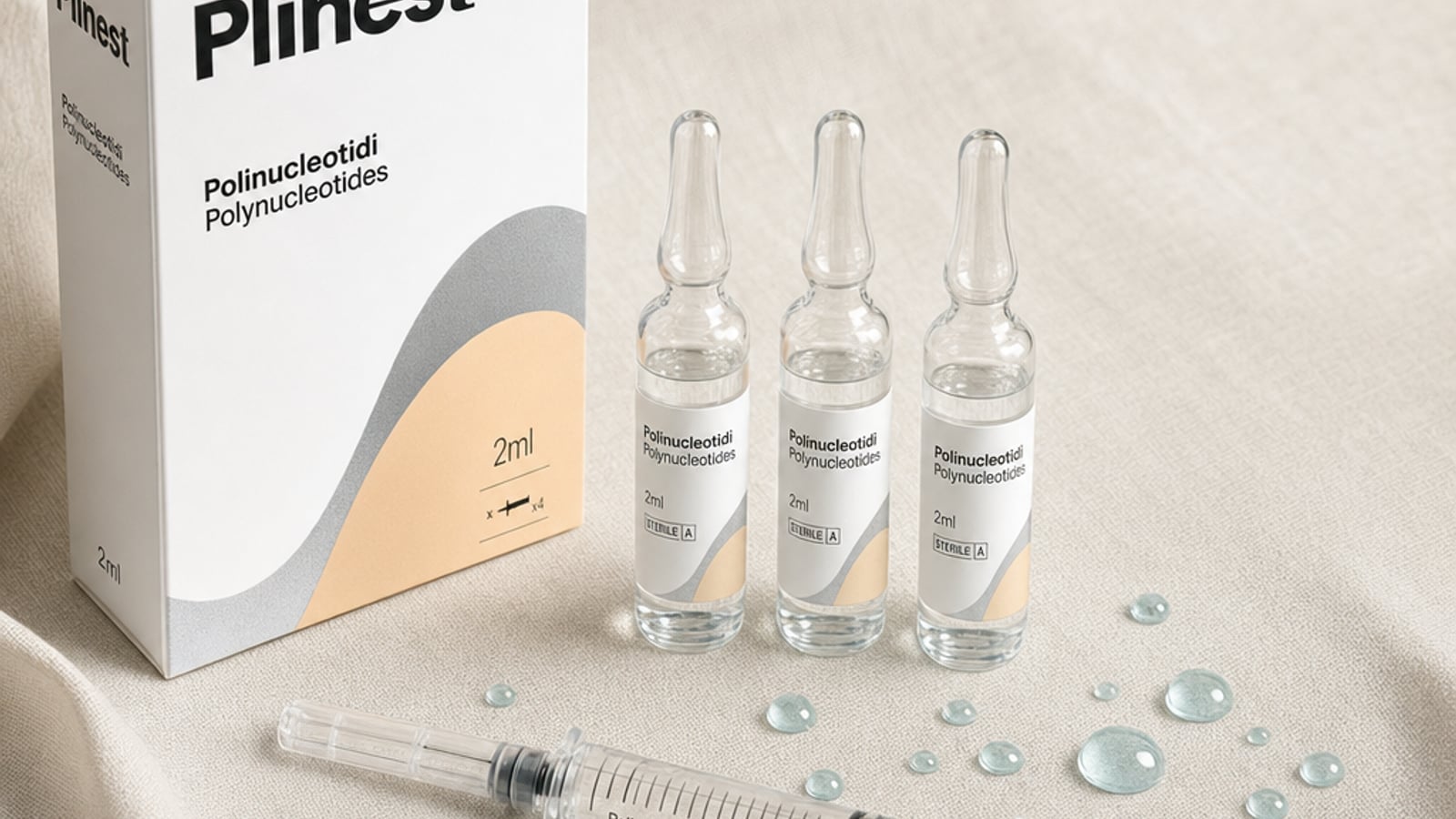
ParamedBiorevitalization involves injections of low and medium molecular weight hyaluronic acid (HA). The main effect is skin hydration through osmotic water attraction, plus a gentle stimulation of fibroblasts. The visible result includes radiance, firmness from hydration, and smoothing of fine 'network-like' wrinkles. Polydeoxyribonucleotides (PDRN) are injections of DNA fragments from salmon/trout. They work not through hydration, but by activating your fibroblasts and stimulating the synthesis of your own collagen. The effect is on skin density and structure, rather than its water balance. These procedures are often prescribed together: biorevitalization for quick radiance and comfort, PDRN for long-term skin quality. There are contraindications.
When to choose what
ParamedBiorevitalization is the first-line choice for dull, dehydrated skin, as an 'express' option before events, and for patients who want to see results quickly. It is also an excellent seasonal support course in autumn and spring. Polydeoxyribonucleotides are the choice for skin thinning, atrophy, thin skin under the eyes, and after prolonged photoaging, when structural improvement is needed. In complex programs, it often starts with a course of PDRN (3–4 sessions) for structure, then transitions to supportive biorevitalization every 1–2 months for freshness and hydration.
Hyaluronic Acid vs DNA Fragments
ParamedBiorevitalization uses hyaluronates (HA) of varying molecular weights—from low (quick hydration) to medium and high molecular weight (longer water retention). Modern products often combine HA with peptides, amino acids, and vitamins (Aquashine BR/PTX, Jalupro HMW, Restylane Vital). The effect includes hydration, superficial lifting from turgor, and gentle fibroblast stimulation. Polydeoxyribonucleotides are long chains of nucleotides 50–1500 kDa from trout/salmon DNA. They bind to A2A receptors on fibroblasts, activating the synthesis of collagen types I and III, cell migration, and angiogenesis. The effect is structural, cumulative, and develops over 2–3 months. Biorevitalization provides an immediate 'wow' effect, while PDRN works deeper and longer.
- Biorevitalization: hyaluronic acid → hydration and turgor
- PDRN: DNA fragments → fibroblast activation via A2A
- Biorevitalization: effect visible within 24–48 hours
- PDRN: effect builds over 2–3 months
- Biorevitalization is better for dehydrated skin
- PDRN is better for atrophy, thin skin, and loss of density
FAQ
Paramed? Which is better — PDRN or biorevitalization? ⌄
These are different procedures for different tasks. Biorevitalization hydrates, while PDRN restructures the dermal structure. If the main issue is dryness and dullness, start with biorevitalization. If it’s thinning, atrophy, or thin skin under the eyes, choose PDRN.
? Can both be done in one course? ⌄
Yes, this is a common program. Usually, a course of PDRN (3–4 sessions with intervals of 2–3 weeks) is followed by supportive biorevitalization every 1–2 months for freshness.
? Which lasts longer? ⌄
The effect of PDRN on density lasts 6–9 months. The effect of biorevitalization lasts 3–4 weeks without support, and with a course of 3–4 sessions — up to 3–4 months.
? What is more noticeable immediately after the procedure? ⌄
Biorevitalization provides an instant effect of hydration and radiance within 24–48 hours. PDRN works slower — noticeable changes appear after 4–8 weeks.
? Which is cheaper? ⌄
Biorevitalization starts from 200 AZN (Aquashine, Jalupro). PDRN starts from 320 AZN (Pluryal Silk), premium protocols (Newest) range from 420–480 AZN.
Booking
ParamedSchedule a consultation at Paramed — the doctor will assess your skin condition and suggest a protocol: biorevitalization, polydeoxyribonucleotides, or their combination.
PDRN and biorevitalization — pros and cons
Paramed- Quick effect — radiance and firmness within 24–48 hours
- Affordable price — starting from 200 AZN
- Suitable as an 'express' procedure before events
- Good for dehydrated and dull skin
- Wide range of protocols for different tasks
- Short-term effect — 3–4 weeks without support
- Does not restore dermal structure
- Slightly helps with pronounced atrophy
- Effect is less noticeable on dry skin in winter
- Rebuild skin structure — density, firmness
- Effect lasts 6–9 months after the course
- Works significantly on thin skin under the eyes and atrophy
- Stimulates your own collagen
- Compatible with biorevitalization in one program
- Effect is 'not instant' — 2–3 months
- More expensive than basic biorevitalization
- Contraindicated in severe fish allergies
- Less 'radiant' effect than HA biorevitalization
Polynucleotides (PDRN / PRDN)
ParamedOur doctors
Certified specialists at Paramed

Elvira Zakiyeva
Cosmetologist (MD)
15+ years' experience
2008 · Azerbaijan Medical University · +1 cert.
Languages: Russian, Azerbaijani
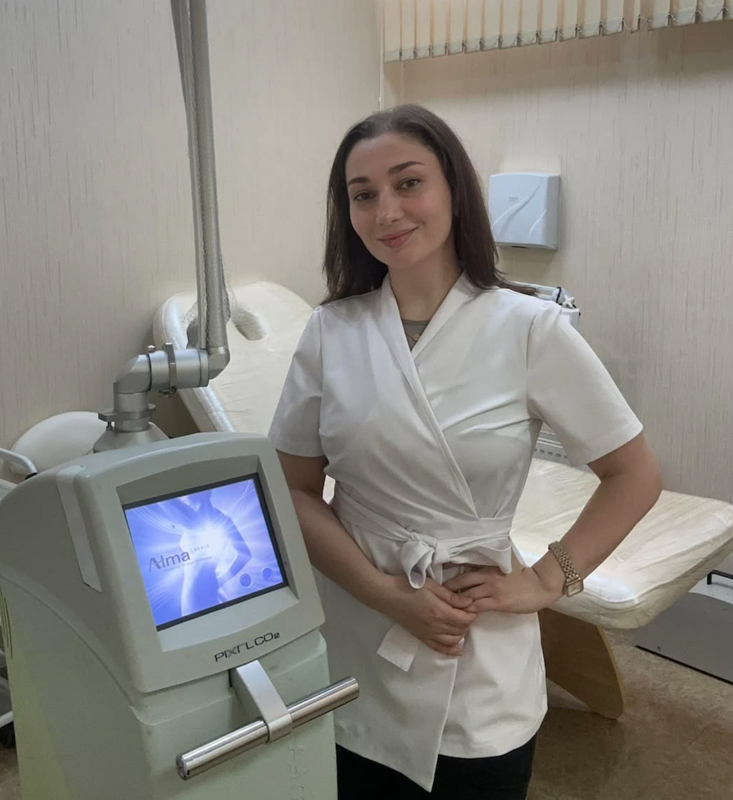
Simona Muradova
Cosmetologist (MD)
2019 · Yaroslavl Medical University · +1 cert.
Languages: Russian, Azerbaijani
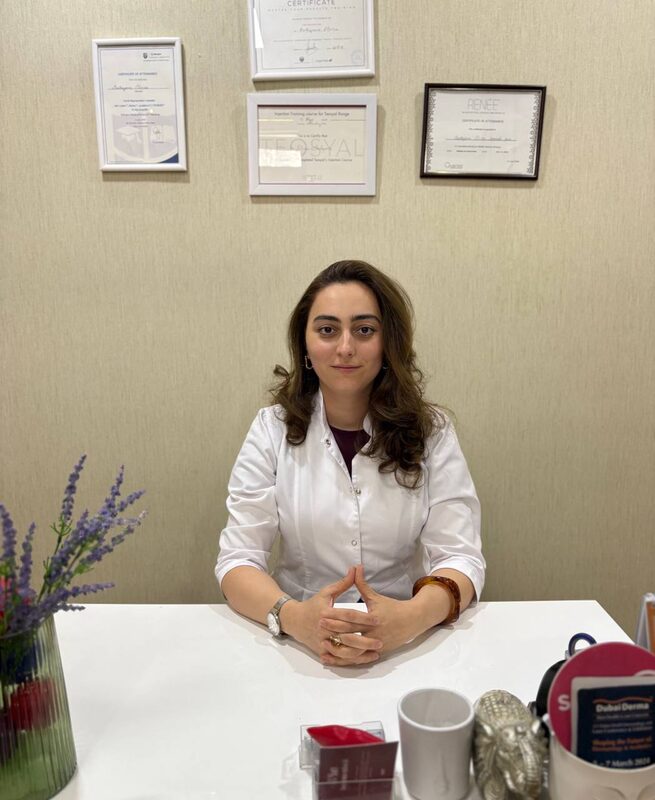
Elmira Jamalova
Cosmetologist (MD)
2009 · Tashkent Medical Academy · +2 cert.
Languages: Russian, Azerbaijani