NucleoSpire DNA-RNA 2% — polynucleotides with hyaluronic acid in Baku
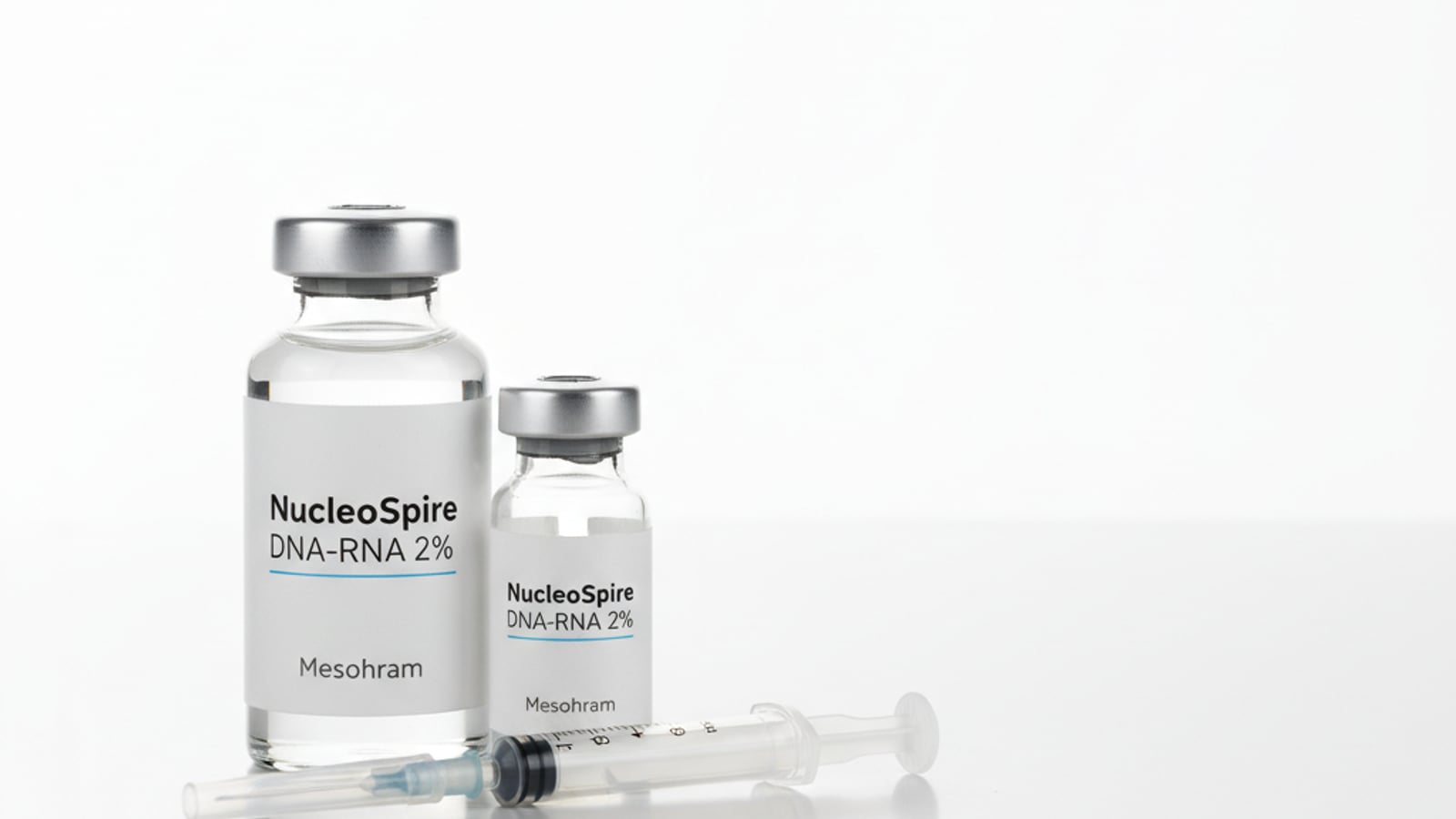
A Mesopharm biorevitalisant built on DNA-RNA complexes: polynucleotides at 20 mg/ml together with non-stabilised hyaluronic acid at 0.3%. Vials of 1.3 ml and 4 ml — for the under-eye area and for the full face.
Book a Treatment
Leave your contact details, and our specialist will contact you for a consultation and booking.
- ✅ Individual program selection
- ✅ Price clarification by areas
- ✅ Answers to all medical questions
By clicking 'Send', you consent to the processing of personal data in accordance with our privacy policy.
Overview
ParamedNucleoSpire DNA-RNA 2% is Mesopharm's product in which polynucleotides come paired with hyaluronic acid. The active sits at 20 mg/ml (2%) as salmon-milt DNA-RNA complexes, with non-stabilised biosynthetic hyaluronic acid at 0.3% and a buffer system. It comes in 1.3 ml and 4 ml vials, which covers both a small delicate area and the whole face. The main indications are intensive revitalisation, age-related change, pigmentation and skin recovery after aggressive procedures. Contraindications apply and a specialist consultation is required.
Benefits
Paramed- ✅ Density and firmness
- ✅ Strong hydration from the HA
- ✅ Works on dullness and uneven tone
- ✅ Recovery after lasers and peels
- ✅ Comfortable to place
- ✅ Suits the periorbital area
How it works
ParamedThe skin is cleansed and disinfected, with numbing cream where needed. The product is placed by microinjections into the mid-dermis; the periorbital area gets a gentler technique and a smaller volume. The session takes 30–40 minutes and finishes with a soothing product and SPF.
Technology
ParamedWhat separates it from pure polynucleotides is the added hyaluronic acid. Non-stabilised HA creates no volume: it holds water and makes the product spread more comfortably, which in practice softens the sensation during treatment. The polynucleotides still do their job as material and signal for fibroblasts. The combination is particularly apt when skin has not only lost density but is dehydrated — typical after a summer, a course of acid peels or laser resurfacing. The 1.3 ml format suits the periorbital area; 4 ml covers face, neck and décolleté.
- Mesopharm — the NucleoSpire line
- Polynucleotides at 20 mg/ml (2%)
- Salmon-milt DNA-RNA complexes
- Non-stabilised HA at 0.3%
- 1.3 ml and 4 ml vials
- Revitalisation, pigmentation, recovery
Preparation & aftercare
Paramed- No aspirin or NSAIDs for 5–7 days (after agreeing it with your doctor)
- No peels or sunbathing for 3 days
- No alcohol for 24 hours
- Do not come with active inflammation, herpes or an acute infection
- Tell us about chronic conditions and allergies
- Do not touch the injection points or apply make-up for the first 24 hours
- Sauna, pool and sport after 3–5 days
- SPF 30+ for at least two weeks
- Other injectable procedures after 7–10 days
- Drink enough water
FAQ
Paramed? How does NucleoSpire differ from plain polynucleotides? ⌄
The added 0.3% hyaluronic acid. It creates no volume but increases hydration and makes the session more comfortable.
? Which vial do I need? ⌄
1.3 ml is usually used for the periorbital area, 4 ml for face, neck or décolleté. The doctor decides the volume at the consultation.
? Does it help with pigmentation? ⌄
It belongs inside a combined protocol: it improves skin quality and recovery, but without SPF — and device work where needed — pigment results will not hold.
? How many sessions are in a course? ⌄
Usually 3–4 at 2–3 week intervals, then maintenance every 4–6 months.
? Can it be done after laser treatment? ⌄
Yes, that is one of the indications — skin recovery after aggressive procedures. The doctor sets the interval.
Booking
ParamedBook a consultation — we'll choose the vial size and map out the course.
Book a consultation →Polynucleotides (PDRN / PRDN)
ParamedCourse plan
ParamedA standard course is 3–4 sessions at 2–3 week intervals, with maintenance every 4–6 months. Hydration shows after the first session; density and tone need the full course. For pigmentation the product belongs inside a combined protocol rather than as a standalone answer — sun protection, and device work where needed, remain the foundation.
Comparison
ParamedAgainst ADN Restart 2% from the same maker the PDRN concentration is comparable, but NucleoSpire adds hyaluronic acid — more hydration and a softer feel. Against POLY-N Strong (25 mg/ml) the concentration is lower, but the 1.3 ml format allows careful work under the eyes. The logic is close to Rejuran HB: polynucleotides plus HA, differing in manufacturer and viscosity. The doctor chooses on the state of the skin, not on how a line is marketed.
Contraindications
Paramed- ⚠️ Pregnancy and breastfeeding
- ⚠️ Allergy to fish and seafood or to the product's components
- ⚠️ Active-phase autoimmune disease
- ⚠️ Oncological disease
- ⚠️ Blood clotting disorders
- ⚠️ Active inflammation or herpes in the treatment area
Why Paramed
ParamedAt Paramed the choice between PDRN products is made after an examination: sometimes concentration matters more, sometimes the added hyaluronic acid and a more comfortable session. We explain the difference in plain language and say honestly when a course will not deliver what you are hoping for. The price for NucleoSpire is quoted at the consultation — it depends on vial size and the number of areas.
Our doctors
Certified specialists at Paramed

Elmira Jamalova
Cosmetologist (MD)
2009 · Tashkent Medical Academy · +2 cert.
Languages: Russian, Azerbaijani

Aybeniz Mamedli
Dermatologist (MD)
2017 · Donetsk National Medical University · +1 cert.
Languages: Russian, Azerbaijani
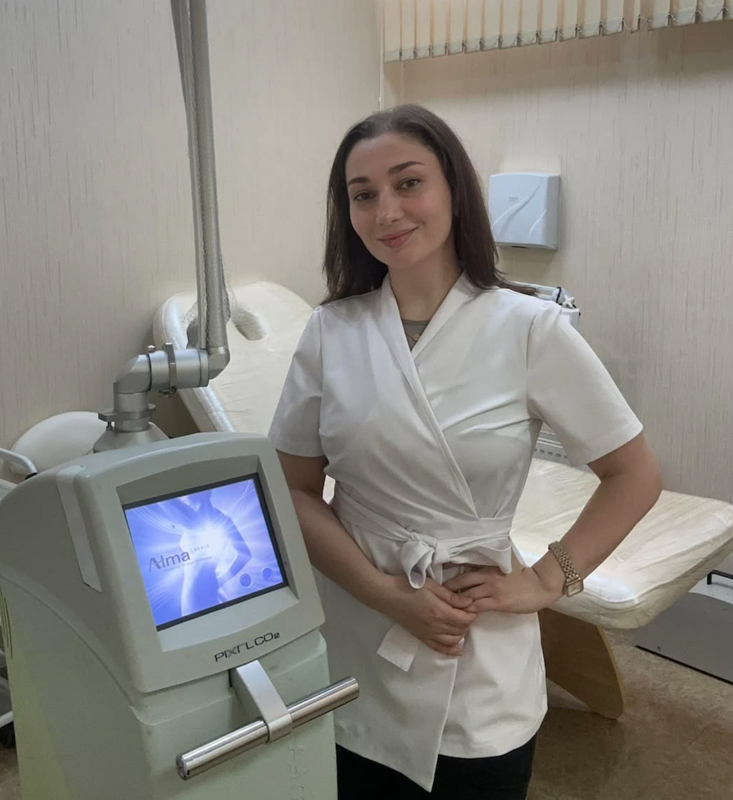
Simona Muradova
Cosmetologist (MD)
2019 · Yaroslavl Medical University · +1 cert.
Languages: Russian, Azerbaijani