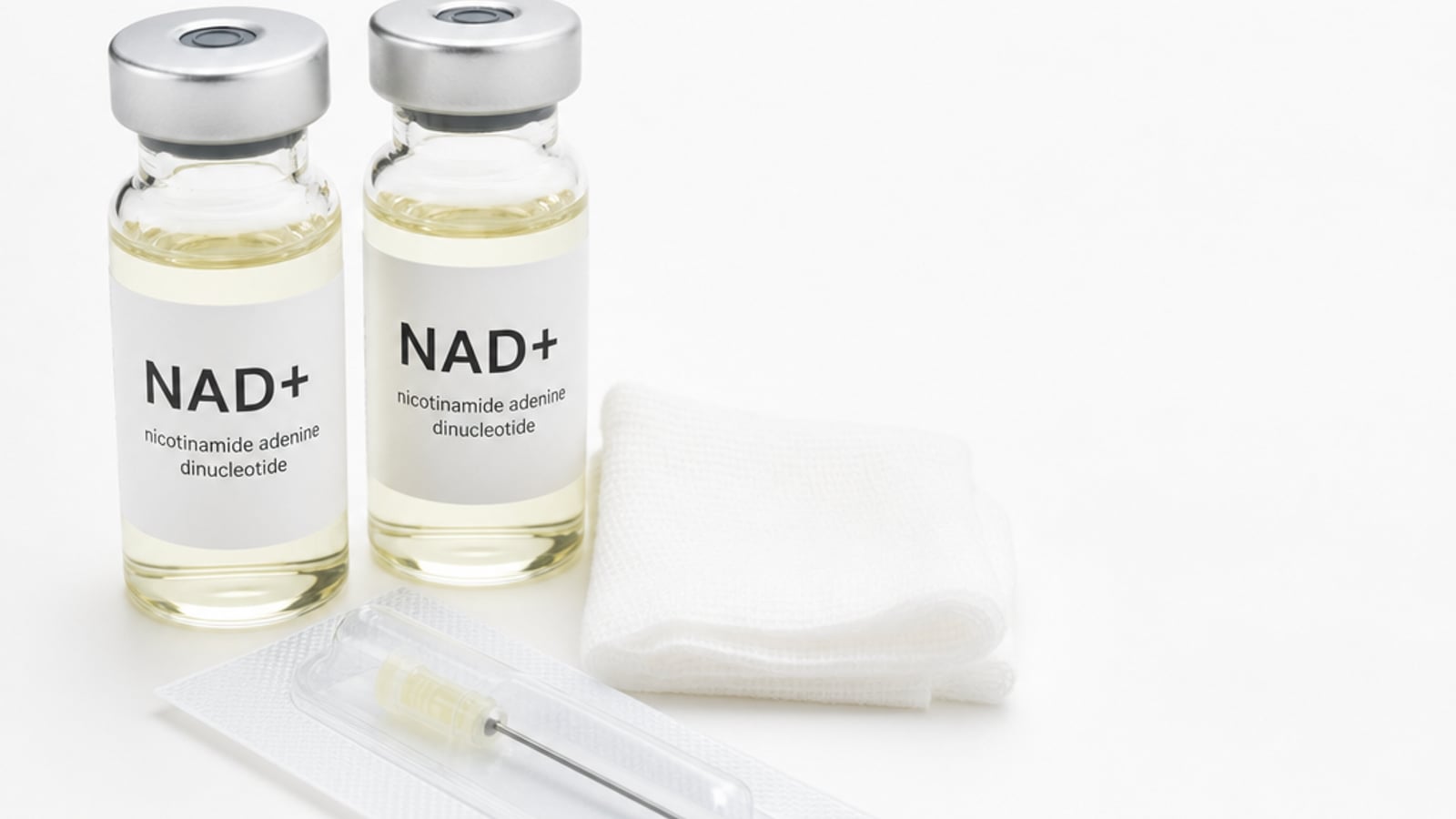
NAD⁺ mesotherapy vs polynucleotides (PDRN)
Polynucleotides work on the structure of the dermis: density, firmness, tissue quality. NAD⁺ mesotherapy works on how the skin looks — tone, freshness, 'fatigue'. These are different goals, not competitors.
Book a Treatment
Leave your contact details, and our specialist will contact you for a consultation and booking.
- ✅ Individual program selection
- ✅ Price clarification by areas
- ✅ Answers to all medical questions
By clicking 'Send', you consent to the processing of personal data in accordance with our privacy policy.
Overview
ParamedPolynucleotides (PDRN/PRDN) are DNA fragments, most often from salmon roe, injected into the dermis to act as a biorepair agent: they improve tissue quality, density and firmness, and help with skin atrophy, thin under-eye skin and post-acne. These are Rejuran, Plinest, Newest, PhilArt, Pluryal Silk and TwAc. NAD⁺ mesotherapy is about something else: a coenzyme involved in cellular energy is delivered intradermally to support renewal where the skin looks tired and dull. Put simply: polynucleotides change the quality of the tissue itself, while NAD⁺ addresses how the skin looks. If your concern is density and structure, NAD⁺ will not solve it. Contraindications apply.
How to choose between them
ParamedGo by how you describe your own concern. 'My skin is thin, vessels show through under the eyes, there are atrophic scars, the tissue is lax' — that is polynucleotides, and NAD⁺ is not an alternative there. 'My skin is basically fine but it looks tired, dull, without freshness' — that is the scenario where NAD⁺ mesotherapy is discussed. In practice many people arrive with the second description while examination shows the first is the real issue, which is why a consultation before choosing is essential. Combining is possible: a PDRN course for structure, NAD⁺ as an accent on tone.
Dermal biorepair versus cellular energy
ParamedPolynucleotides form a gel matrix in the dermis, hold water and create a favourable environment for fibroblasts: hence the gain in density and firmness, the improvement in thin skin and the work on atrophic change. That is why PDRN is the standard answer for thin under-eye skin, atrophy, post-acne and general tissue laxity — not simply for glow. The NAD⁺ mechanism is different: the coenzyme participates in cellular energy production and antioxidant defense. Intradermal delivery is conceived as support for normal renewal processes. NAD⁺ does not build a matrix in the dermis and does not directly increase tissue density. The evidence base for PDRN is considerably broader; for intradermal NAD⁺ the data are still accumulating.
- PDRN: DNA fragments, a gel matrix, an environment for fibroblasts
- NAD⁺: a cellular-energy coenzyme
- PDRN: density, firmness, tissue quality, atrophy
- NAD⁺: dull tone, freshness, skin 'fatigue'
- PDRN: the standard for thin under-eye skin and post-acne
- PDRN: broader evidence; NAD⁺: data still accumulating
FAQ
Paramed? Which for thin under-eye skin? ⌄
Polynucleotides. This is their core indication — Rejuran I, PhilArt EYE and TwAc Eyes were developed specifically for the periorbital area. NAD⁺ mesotherapy does not build up the structure of thin skin.
? Which is better for glow and freshness of tone? ⌄
Here NAD⁺ mesotherapy is closer to the goal: it is aimed specifically at tired, dull skin. Polynucleotides also improve how the skin looks, but their strength is density and tissue quality, and the effect develops more slowly.
? Which is more expensive? ⌄
Polynucleotides cost 320–480 AZN per session depending on the formulation. For NAD⁺ mesotherapy the price is quoted on request and depends on the formulation, areas and protocol.
? Which has stronger evidence? ⌄
Polynucleotides, by a considerable margin. There is extensive practice and research on PDRN. Evidence for the cosmetic effects of intradermal NAD⁺ is still developing, and we do not hide that.
? Can they be done together? ⌄
Yes, within one plan, but usually as separate treatments spaced apart rather than in a single session. Sequence and intervals are set by your doctor.
? Which for post-acne? ⌄
Polynucleotides. They work on tissue quality and atrophic change. For marked post-acne, microneedling, laser and exosomes are also discussed. NAD⁺ mesotherapy is not the decisive treatment here.
Let's establish what actually addresses your concern
ParamedPolynucleotides and NAD⁺ mesotherapy solve different problems, so the choice starts with an examination. At the consultation we will assess skin density, thickness and tone and recommend what genuinely works in your case.
Book your consultation →NAD⁺ mesotherapy and polynucleotides — pros and cons
Paramed- Targeted work on skin 'fatigue' and dull tone
- Superficial delivery, session 20–40 minutes
- Minimal downtime
- Face, under-eye area, neck, décolletage, hands
- Fits well into a combination protocol
- Clinical evidence is still developing
- Does not address volume, laxity or deep wrinkles
- Requires a course plus maintenance sessions
- Price on request — depends on formulation and areas
- Work on the structure and density of the dermis
- The standard for thin under-eye skin
- Help with skin atrophy and post-acne
- The result holds for a long time after a course
- Broad evidence base and extensive practice
- Expensive — 320–480 AZN per session
- Papules and swelling possible for a few days
- Require a course of 2–4 sessions at 2–4 week intervals
- Not the fastest treatment for glow — they work deeper and more slowly
Courses and frequency
ParamedPolynucleotides run as a course of 2–4 sessions at 2–4 week intervals; the effect develops gradually and holds for a long time, with maintenance usually every 6–12 months. NAD⁺ mesotherapy runs as a course of several sessions followed by maintenance, with the protocol set at consultation. Neither treatment is designed for one-off use — a single session of either does not deliver a full result.
Polynucleotides (PDRN / PRDN)
ParamedContraindications — common to injectable treatments
Paramed- ⚠️ Pregnancy and breastfeeding
- ⚠️ Active skin infection in the treatment area, herpes in an active phase
- ⚠️ Allergy to ingredients of the formulation
- ⚠️ A tendency toward abnormal scarring — keloid or hypertrophic scars
- ⚠️ Bleeding or clotting disorders, and anticoagulant use not cleared with your doctor
- ⚠️ Active malignancy
How we choose the treatment
Paramed- 📍 Consultation first: we assess your skin and your primary concern
- 📍 We do not sell the fashionable treatment when a cheaper, more reliable one solves the problem
- 📍 We say plainly where the evidence is strong and where it is still developing
- 📍 All injectable treatments are performed by a physician, with traceable formulations
- 📍 A clinic in Baku — treatments can be combined into a single yearly plan
Our doctors
Certified specialists at Paramed
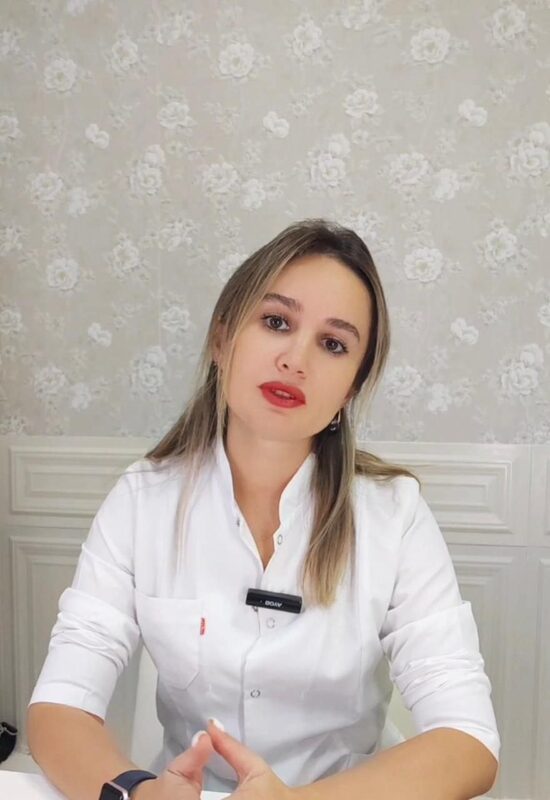
Elvira Zakiyeva
Cosmetologist (MD)
15+ years' experience
2008 · Azerbaijan Medical University · +1 cert.
Languages: Russian, Azerbaijani
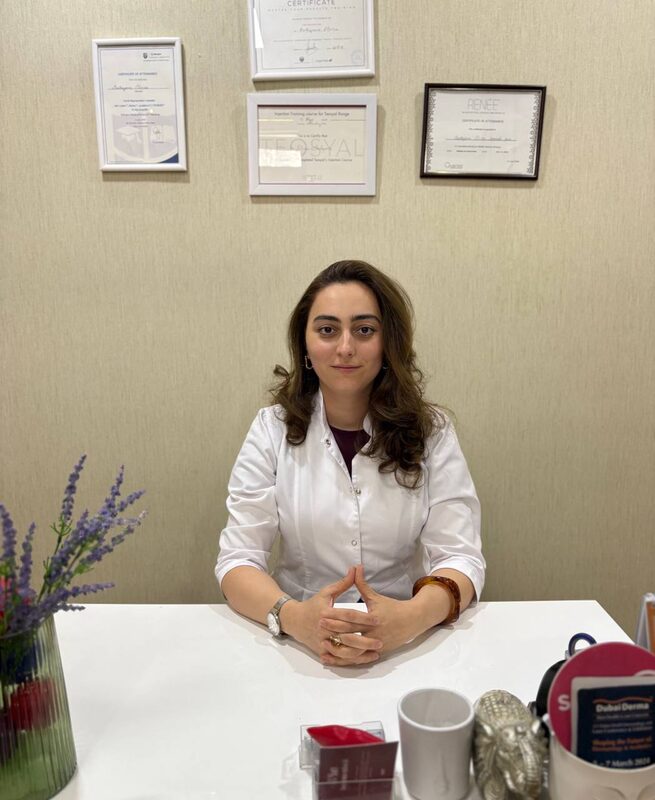
Elmira Jamalova
Cosmetologist (MD)
2009 · Tashkent Medical Academy · +2 cert.
Languages: Russian, Azerbaijani
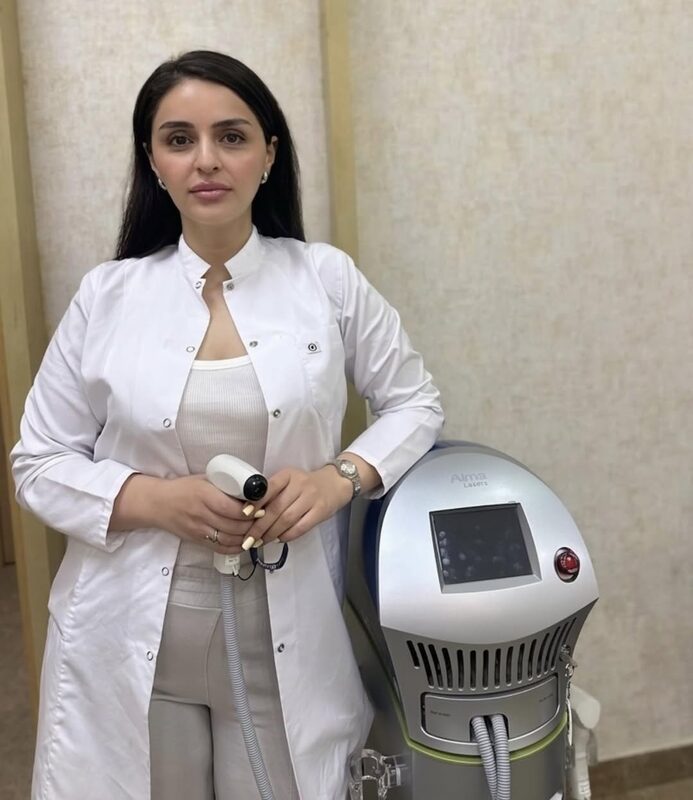
Aybeniz Mammedli
Dermatologist (MD)
2017 · Donetsk National Medical University · +1 cert.
Languages: Russian, Azerbaijani