NAD⁺ mesotherapy vs exosomes
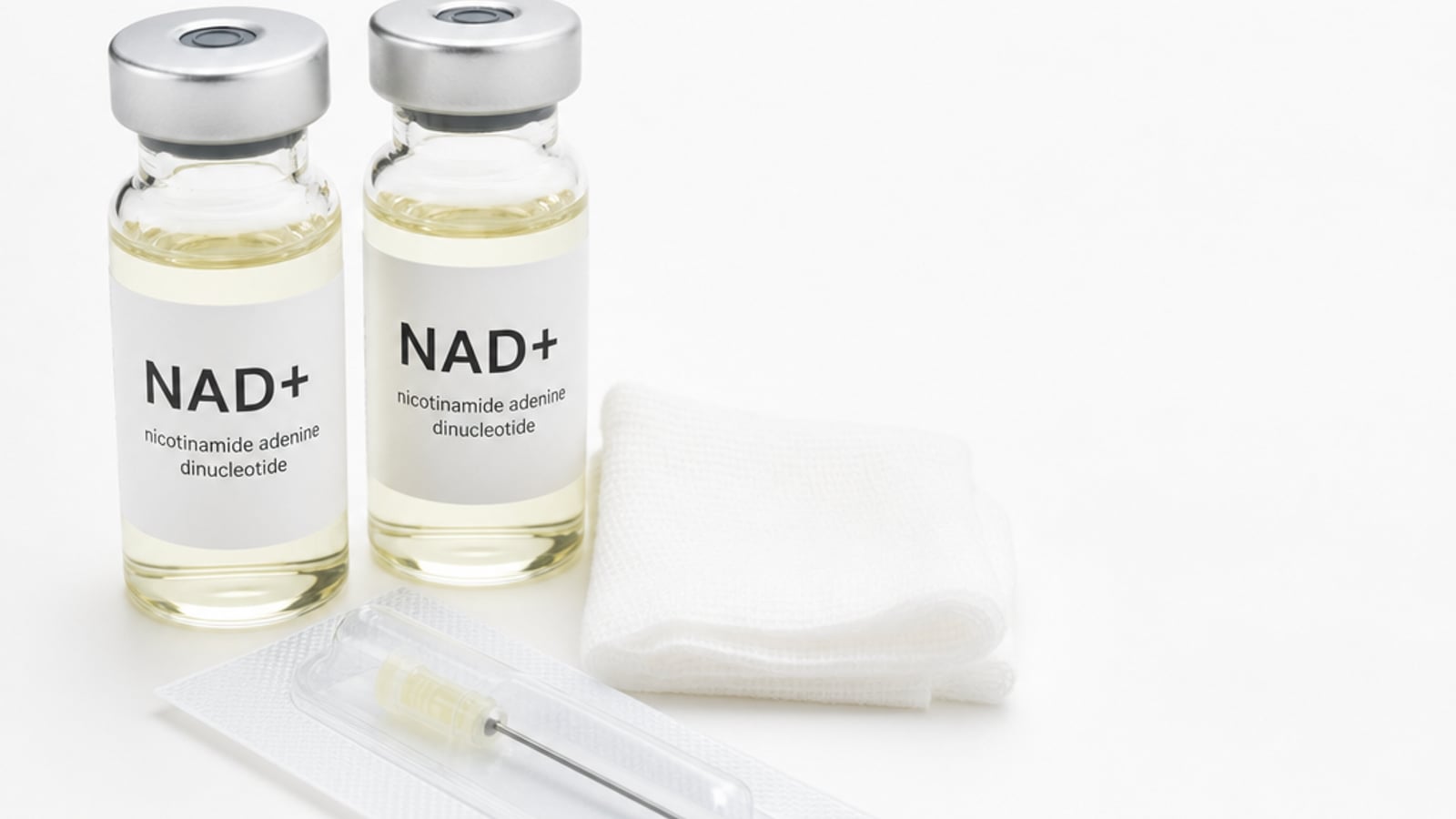
Exosomes are nanovesicles that carry ready-made regeneration signals into skin cells. NAD⁺ is a coenzyme involved in cellular energy. The difference is not only mechanism but price — and here the gap is substantial.
Book a Treatment
Leave your contact details, and our specialist will contact you for a consultation and booking.
- ✅ Individual program selection
- ✅ Price clarification by areas
- ✅ Answers to all medical questions
By clicking 'Send', you consent to the processing of personal data in accordance with our privacy policy.
Overview
ParamedExosomes are extracellular vesicles of 30–150 nm carrying growth factors, cytokines and microRNA. They do not feed the skin; they pass cells a regeneration signal, activating collagen synthesis and damping inflammation. This is the premium segment — ExoCoBio ASCE+ SRLV, Exomage, BENEV, Purasomes. NAD⁺ mesotherapy works differently and more modestly: a coenzyme involved in cellular energy production and antioxidant defense is delivered intradermally to support renewal in tired-looking skin. The honest comparison is this: exosomes have stronger and better-documented regenerative action at several times the price; NAD⁺ is a lighter option whose evidence is still developing. Contraindications apply.
When to choose which
ParamedExosomes are the choice for demanding indications: recovery after laser resurfacing or CO2, post-acne with an inflammatory component, rosacea and reactive skin, and a general renewal once or twice a year. If you are having an aggressive device procedure, exosomes are the right partner, and NAD⁺ will not replace them there. NAD⁺ mesotherapy is the lighter scenario: skin looks tired and dull, hydration is fine, no aggressive procedures are planned, and you want a supportive option without a premium budget. If you are unsure, start with a consultation — the price gap here is too large to guess at.
Signalling regeneration versus cellular energy
ParamedExosomes are derived from adipose mesenchymal stem cells (ASCE+ SRLV), umbilical stem cells (BENEV), colostrum (Purasomes), or engineered as synthetic exosomal structures (Promoitalia). Entering skin cells, they deliver TGF-β, VEGF, EGF, FGF and microRNA — intervening directly in regeneration signalling pathways. That is where their strength after aggressive procedures comes from: they shorten the redness and swelling window after fractional laser, CO2 and microneedling. NAD⁺ carries no regeneration signals. It participates in the cell's energy metabolism, and the aim of intradermal delivery is to support normal renewal rather than trigger a growth cascade. In terms of raw potency these are different weight classes.
- Exosomes: growth factors, cytokines and microRNA — a regeneration signal
- NAD⁺: a cellular-energy coenzyme, with no signalling factors
- Exosomes: strong anti-inflammatory action, Exomage especially
- Exosomes: the standard for recovery after laser and microneedling
- NAD⁺: work on dull tone and skin 'fatigue'
- Exosomes: 3–6 months after a course; NAD⁺: course plus maintenance
FAQ
Paramed? Which is more powerful? ⌄
Exosomes, without question. They intervene directly in regeneration signalling and have a stronger documented basis for skin repair. NAD⁺ mesotherapy is a lighter, supportive option.
? Which after laser? ⌄
Exosomes. They are applied immediately after fractional laser, CO2 or microneedling and noticeably shorten the redness and swelling window through their anti-inflammatory action. NAD⁺ is not the standard here.
? How big is the price difference? ⌄
Substantial. Exosomes run 250–580 AZN per session depending on the formulation. For NAD⁺ mesotherapy the price is quoted on request, but it is a fundamentally lighter budget scenario.
? Can they be combined? ⌄
Yes, within a yearly plan. Typically an exosome course for regeneration plus lighter treatments between courses. Combining them in one session only on a doctor's instruction.
? Which for rosacea and sensitive skin? ⌄
Exosomes, specifically ExoCoBio Exomage — its anti-inflammatory profile was developed for rosacea, couperose and reactive skin. NAD⁺ mesotherapy is not started during active inflammation.
? Is there any point in NAD⁺ if the budget allows exosomes? ⌄
If the goal is regeneration, post-acne or recovery after laser, choose exosomes. If the goal is specifically tired, dull skin with an otherwise sound dermis, NAD⁺ may be more appropriate and cheaper. Your doctor will say plainly what actually addresses your concern.
Let's compare against your concern and budget
ParamedThe price gap between these treatments is too large to choose from a description. Come in for a consultation — we will assess your skin and tell you whether you need exosomes or whether the goal is met more simply.
Book your consultation →NAD⁺ mesotherapy and exosomes — pros and cons
Paramed- Targeted work on skin 'fatigue' and dull tone
- Superficial delivery, session 20–40 minutes
- Minimal downtime
- Face, under-eye area, neck, décolletage, hands
- Fits well into a combination protocol
- Clinical evidence is still developing
- Does not address volume, laxity or deep wrinkles
- Requires a course plus maintenance sessions
- Price on request — depends on formulation and areas
- Powerful regenerative effect
- Strong anti-inflammatory action — rosacea, post-acne
- The standard for recovery after laser, CO2 and microneedling
- Effect lasts 3–6 months after a course
- Visible improvement in tone and radiance within 1–2 weeks
- Expensive — 250–580 AZN per session
- Overkill if the goal is only to revive tone
- Best paired with microneedling or laser for maximum effect
- A yearly course costs considerably more
Courses and frequency
ParamedExosomes usually run as a course of 2–4 sessions at 2–4 week intervals, often immediately after microneedling, RF or laser; the effect holds for 3–6 months and the course is repeated once or twice a year. NAD⁺ mesotherapy runs as a course of several sessions followed by maintenance, with the protocol set at consultation. A practical yearly pattern: one exosome course plus lighter maintenance treatments in between.
Exosomes — ExoCoBio, BENEV, Zishel, Promoitalia
ParamedContraindications — common to injectable treatments
Paramed- ⚠️ Pregnancy and breastfeeding
- ⚠️ Active skin infection in the treatment area, herpes in an active phase
- ⚠️ Allergy to ingredients of the formulation
- ⚠️ A tendency toward abnormal scarring — keloid or hypertrophic scars
- ⚠️ Bleeding or clotting disorders, and anticoagulant use not cleared with your doctor
- ⚠️ Active malignancy
How we choose the treatment
Paramed- 📍 Consultation first: we assess your skin and your primary concern
- 📍 We do not sell the fashionable treatment when a cheaper, more reliable one solves the problem
- 📍 We say plainly where the evidence is strong and where it is still developing
- 📍 All injectable treatments are performed by a physician, with traceable formulations
- 📍 A clinic in Baku — treatments can be combined into a single yearly plan
Our doctors
Certified specialists at Paramed
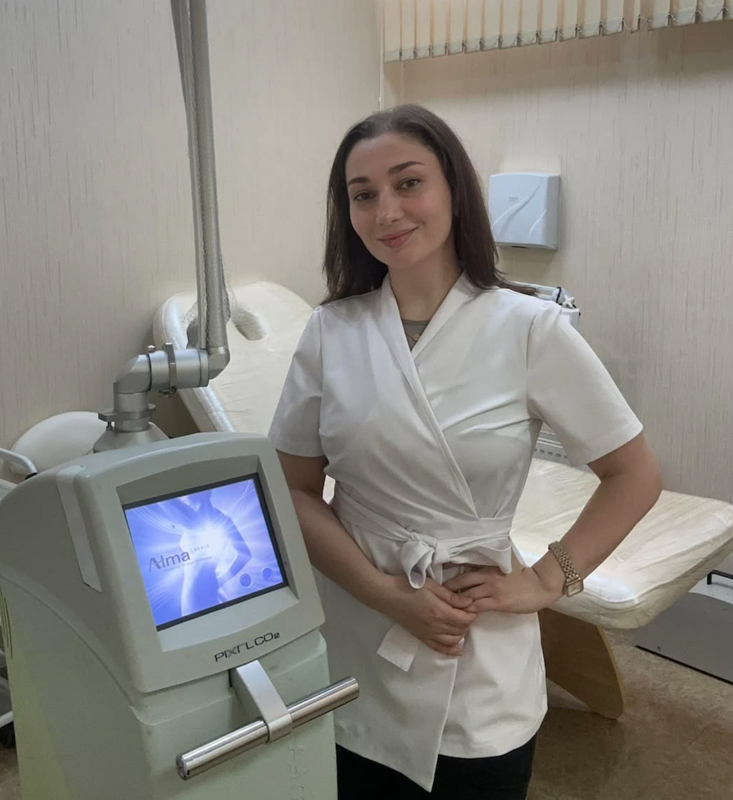
Simona Muradova
Cosmetologist (MD)
2019 · Yaroslavl Medical University · +1 cert.
Languages: Russian, Azerbaijani
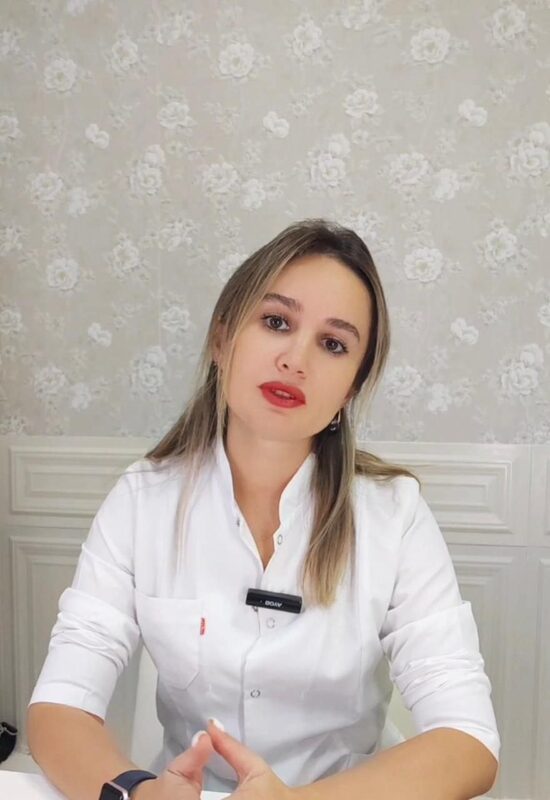
Elvira Zakiyeva
Cosmetologist (MD)
15+ years' experience
2008 · Azerbaijan Medical University · +1 cert.
Languages: Russian, Azerbaijani
Aybeniz Mammedli
Dermatologist (MD)
2017 · Donetsk National Medical University · +1 cert.
Languages: Russian, Azerbaijani