Alexandrite laser vs Soprano Titanium — which to choose in Baku
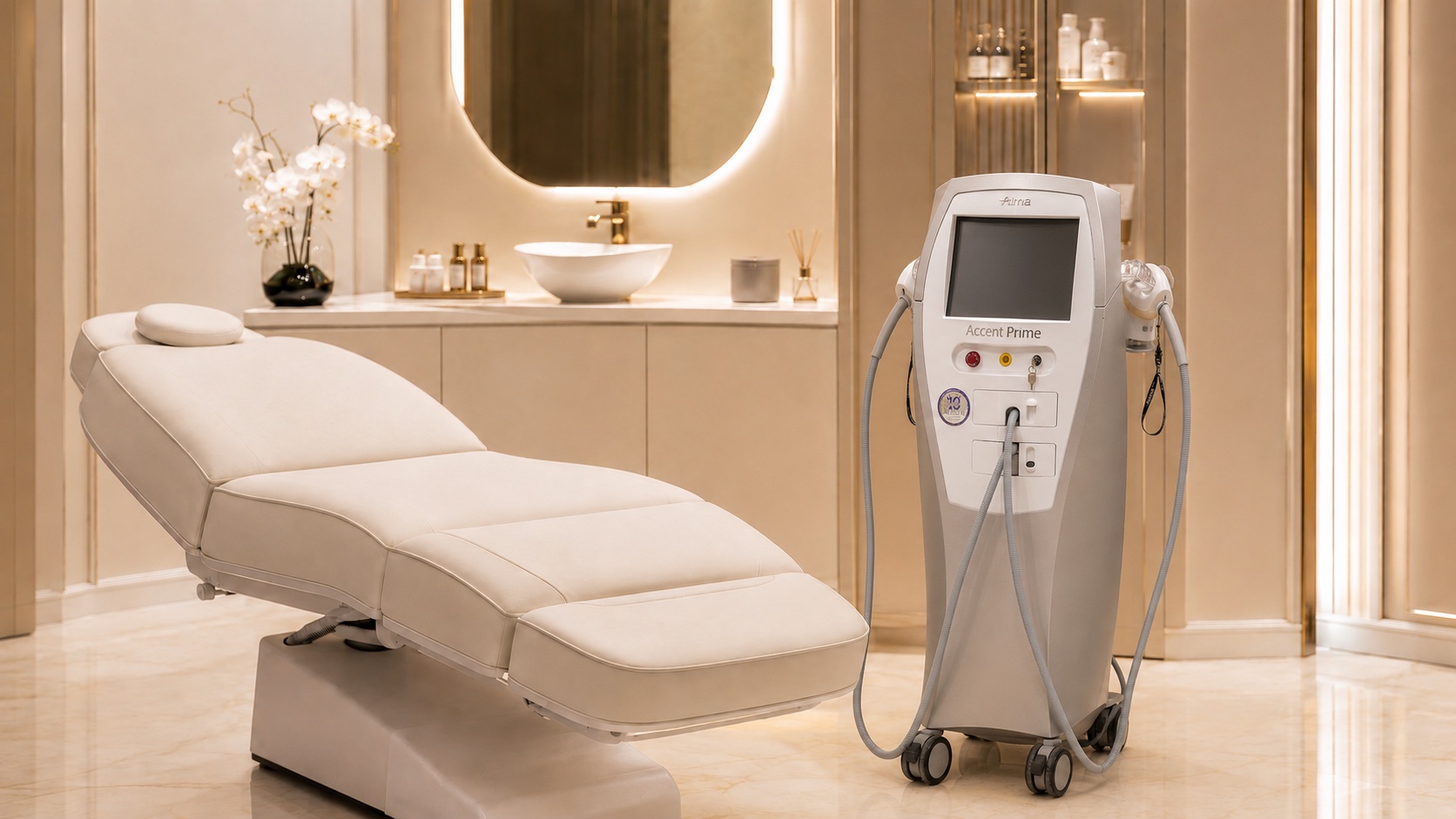
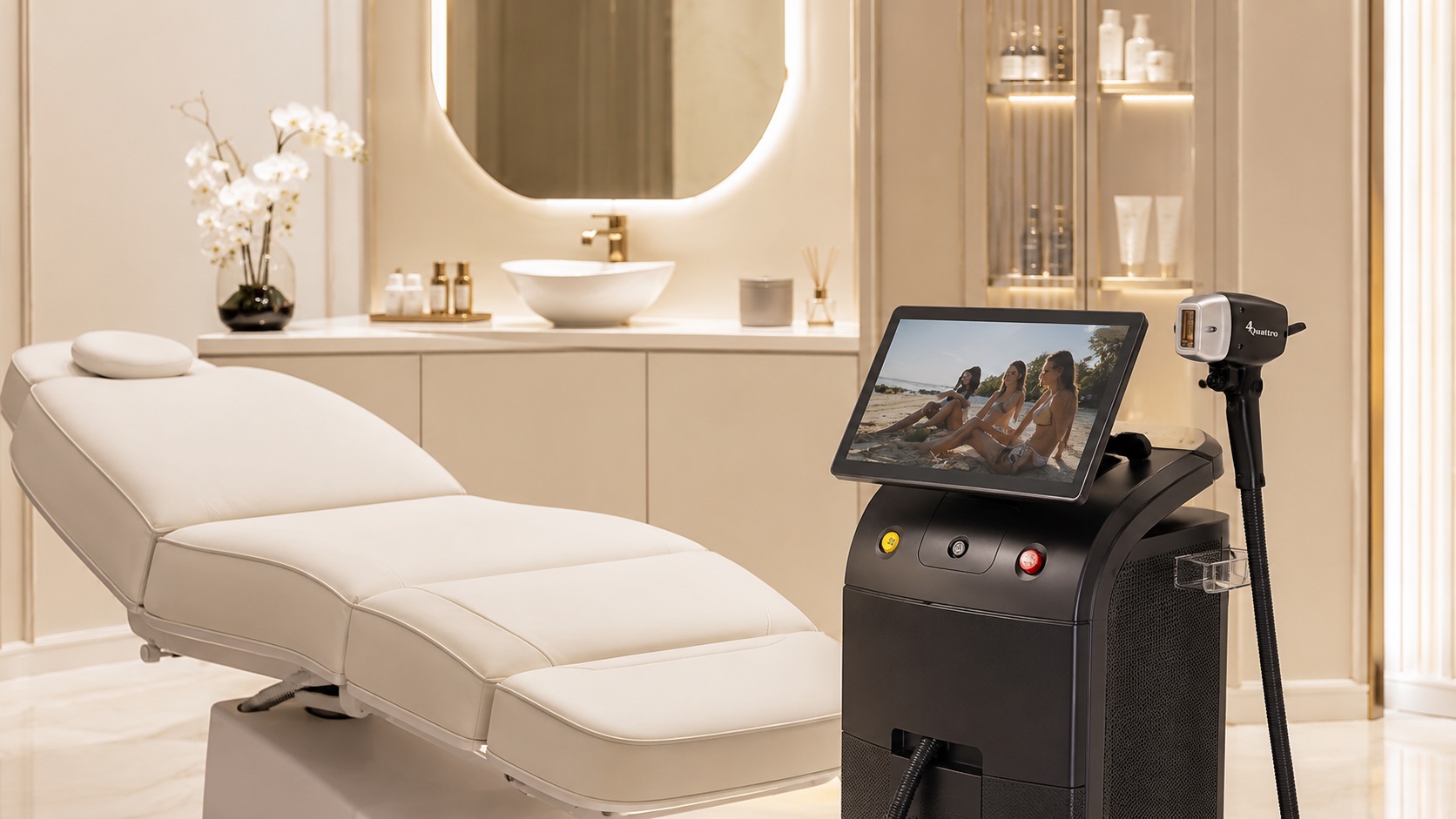
The classic alexandrite laser at 755 nm (Candela GentleLase, Cynosure) is one wavelength and a stamping pulse. Soprano Titanium from Alma Lasers is the flagship — three wavelengths (alexandrite 755 + diode 810 + Nd:YAG 1064 nm) in one handpiece, a 4 cm² spot and ICE contact cooling. At Paramed (Baku) Soprano Titanium is our core platform.
Procedure video
Soprano Titanium laser hair removalWatch on YouTube ↗
Book a Treatment
Leave your contact details, and our specialist will contact you for a consultation and booking.
- ✅ Individual program selection
- ✅ Price clarification by areas
- ✅ Answers to all medical questions
By clicking 'Send', you consent to the processing of personal data in accordance with our privacy policy.
The comparison in brief
ParamedClassic "alexandrite 755 nm" (Candela GentleLase, Cynosure Apogee and similar) is one wavelength and a stamping pulse with cryogenic DCD cooling. It suits light skin (I–III) with fine or light-dark hair. Soprano Titanium is the flagship of the Alma Lasers line. A single handpiece combines three wavelengths (alexandrite 755 nm + diode 810 nm + Nd:YAG 1064 nm) firing together (TriPro), and a 4 cm² sapphire tip significantly speeds up large areas. With active ICE contact cooling, SHR and In-Motion, it offers a different level of comfort and versatility compared with classic alexandrite. Contraindications apply.
Laser hair removal — women
Paramed- ICE / Platinum 79 AZN
- Titanium 95 AZN
- ICE / Platinum 95 AZN
- Titanium 110 AZN
- Price 18 AZN
- Range 12–18 AZN
- ICE / Platinum 49 AZN
- Titanium 54 AZN
- ICE / Platinum 49 AZN
- Titanium 54 AZN
- ICE / Platinum 20 AZN
- Titanium 25 AZN
- ICE / Platinum 20 AZN
- Titanium 25 AZN
- ICE / Platinum 54 AZN
- Titanium 59 AZN
- ICE / Platinum 35 AZN
- Titanium 40 AZN
- ICE / Platinum 20 AZN
- Titanium 25 AZN
- ICE / Platinum 20 AZN
- Titanium 25 AZN
- ICE / Platinum 20 AZN
- Titanium 25 AZN
- ArmpitsFor packages: +5 AZN5 AZN
Original Soprano platforms (Alma Lasers)
Paramed uses original Soprano ICE, Platinum and Titanium platforms by Alma Lasers (Israel), with original handpieces and safety-first protocols.
Why Soprano Titanium is faster and more versatile than mono-alexandrite
Paramed- ✅ Alexandrite 755 nm fires in every Titanium impulse — selectivity preserved
- ✅ Diode 810 nm and Nd:YAG 1064 nm cover other phototypes and hair types
- ✅ 4 cm² spot speeds up large areas (legs, back, abdomen)
- ✅ Active ICE contact cooling — comfort during the session
- ✅ Light and dark skin handled without changing devices
- ✅ Test patch 3 AZN — try the device before committing to a course
How we tune the protocol on Soprano Titanium
ParamedAt the consultation the specialist assesses phototype on the Fitzpatrick scale, hair density, color and type, skin condition and any tan. On Soprano Titanium the protocol parameters are set for one handpiece with three wavelengths: for light phototypes with fine hair the emphasis shifts toward 755 nm alexandrite; for medium skin toward 810 nm diode; for dark phototypes toward Nd:YAG 1064 nm. All three wavelengths stay in the impulse, so the shift to "different skin" happens without changing devices. The 4 cm² spot makes legs, back and abdomen faster to cover in a single session.
Alexandrite vs Soprano Titanium — what's different
ParamedClassic alexandrite 755 nm uses a stamping pulse, usually 12–18 mm wide, cooled by a cryogenic DCD spray. The device fires shot by shot — one impulse, one spot. The wavelength is strictly one: 755 nm. Soprano Titanium works differently: a 4 cm² tip glides smoothly across the skin (In-Motion), a series of low-energy pulses gradually heats the follicle (SHR), and in every impulse three wavelengths fire simultaneously (TriPro: 755 + 810 + 1064 nm). Active ICE contact cooling through a sapphire tip works continuously throughout the session. That gives two main advantages: versatility across phototypes (I–VI without changing devices) and speed on large areas.
- Classic alexandrite — stamping pulse, one 755 nm wavelength, DCD spray
- Soprano Titanium — 4 cm² spot, TriPro (3 wavelengths per impulse)
- SHR + In-Motion — gradual heating in motion
- Active ICE contact cooling through a sapphire tip
- All three wavelengths (alexandrite + diode + Nd:YAG) fire together
Course plan
ParamedA course is typically 5–8 sessions at 4–6 week intervals. Session count is driven by hair type and hormonal background, not the device name. On Soprano Titanium large areas pass faster thanks to the 4 cm² spot — that speeds the session itself, but not the number of sessions in the course.
Alexandrite vs Soprano Titanium — pros and cons
Paramed- High selectivity for hair melanin
- Well-known wavelength with extensive clinical experience
- Works well on fine, light-to-medium-dark hair
- Suits phototypes I–III
- Only one wavelength — narrow application window
- Restrictions on dark skin (IV–VI)
- Sensitive to tan
- Stamping pulse — more passes on large areas
- Cryogenic spray cooling — brief, only just before the pulse
- Three wavelengths in one flash — TriPro
- 4 cm² spot — large areas covered faster
- Safe for all phototypes (I–VI) without changing devices
- Alexandrite 755 nm fires in every impulse
- Active ICE contact cooling through a sapphire tip
- SHR + In-Motion: less discomfort, gradual heating
- Protocol parameters tuned individually
- Industry platform price is higher than mono-alexandrite
Contraindications (common to alexandrite and Soprano)
Paramed- ⚠️ Pregnancy and lactation
- ⚠️ Active tan (especially with 755 nm)
- ⚠️ Oncological conditions
- ⚠️ Inflammation or infection in the area
- ⚠️ Decompensated diabetes
- ⚠️ Photosensitizing medication
- ⚠️ Fresh tattoos in the area
- ⚠️ Epilepsy (case-by-case)
FAQ
Paramed? Do you have a "classic" alexandrite laser — Candela GentleLase or Cynosure? ⌄
Yes — we run a standalone Arion alexandrite 755 nm laser, though not the Candela or Cynosure badge specifically. Alexandrite 755 nm is also inside every impulse of Soprano Platinum / Titanium, alongside diode 810 nm and Nd:YAG 1064 nm, so you can compare both architectures here.
? How does Soprano Titanium differ from mono-alexandrite? ⌄
Alexandrite gives one wavelength and a stamping pulse. Soprano Titanium combines alexandrite 755 nm with diode 810 nm and Nd:YAG 1064 nm in one impulse (TriPro), uses a 4 cm² spot and active ICE contact cooling. That delivers phototype versatility and speed on large areas.
? If I have light skin and fine hair — is there any point in Soprano Titanium over pure alexandrite? ⌄
Yes: the 755 nm wavelength on Soprano Titanium is the same as on classic alexandrite. Selectivity for hair melanin is preserved. On top of that you get ICE contact cooling, gradual SHR heating and a 4 cm² spot — that affects comfort and speed, not just efficacy.
? Can Soprano Titanium be used on dark skin? ⌄
Yes. On Soprano Titanium the protocol shifts toward Nd:YAG 1064 nm, which is safe for dark phototypes (IV–VI). All three wavelengths remain in the impulse, but the "share" of each is tuned to the phototype. That's safer than pure alexandrite on dark skin.
? How many sessions do I need? ⌄
Typically 5–8 sessions at 4–6 week intervals. The count depends on hair type and hormonal background, not the device name.
? How much is laser hair removal at Paramed? ⌄
Test patch 3 AZN, underarms 8 AZN, bikini 20 AZN, face 18 AZN, full legs 35 AZN, full body 79 AZN. The full price list is in the "Pricing" block above.
Why Soprano Titanium is our core platform at Paramed
Paramed- 📍 Four Soprano platforms in one center: ICE Alexandrite, ICE Diode, Platinum, Titanium
- 📍 Alexandrite 755 nm is available here — within every Titanium impulse
- 📍 4 cm² spot — large areas faster than on classic alexandrite
- 📍 Test patch 3 AZN — compare comfort and skin response before starting
- 📍 Experienced specialists, individual parameter selection
Test patch 3 AZN — try Soprano Titanium in practice
ParamedIf you've been choosing between classic alexandrite and Soprano Titanium, try Titanium on a small area for 3 AZN. It's the most honest way to compare comfort, speed and skin response.
Book the 3 AZN test patch →Our doctors
Certified specialists at Paramed
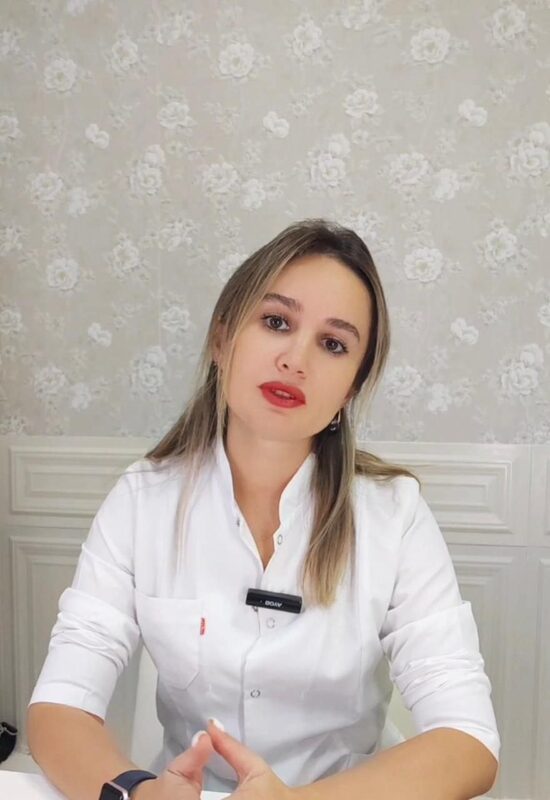
Elvira Zakiyeva
Cosmetologist (MD)
15+ years' experience
2008 · Azerbaijan Medical University · +1 cert.
Languages: Russian, Azerbaijani
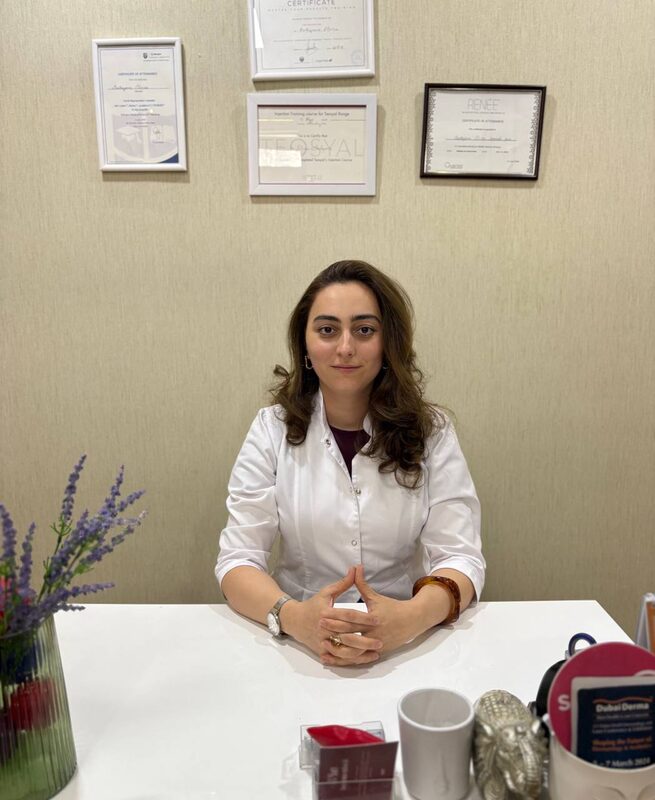
Elmira Jamalova
Cosmetologist (MD)
2009 · Tashkent Medical Academy · +2 cert.
Languages: Russian, Azerbaijani
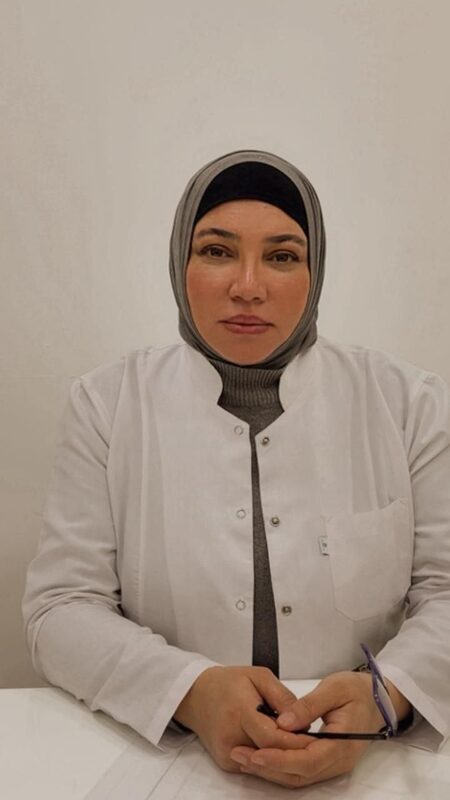
Rena Nasibova
Cosmetologist (MD)
25+ years' experience
1999 · Azerbaijan Medical University · +1 cert.
Languages: Russian, Azerbaijani