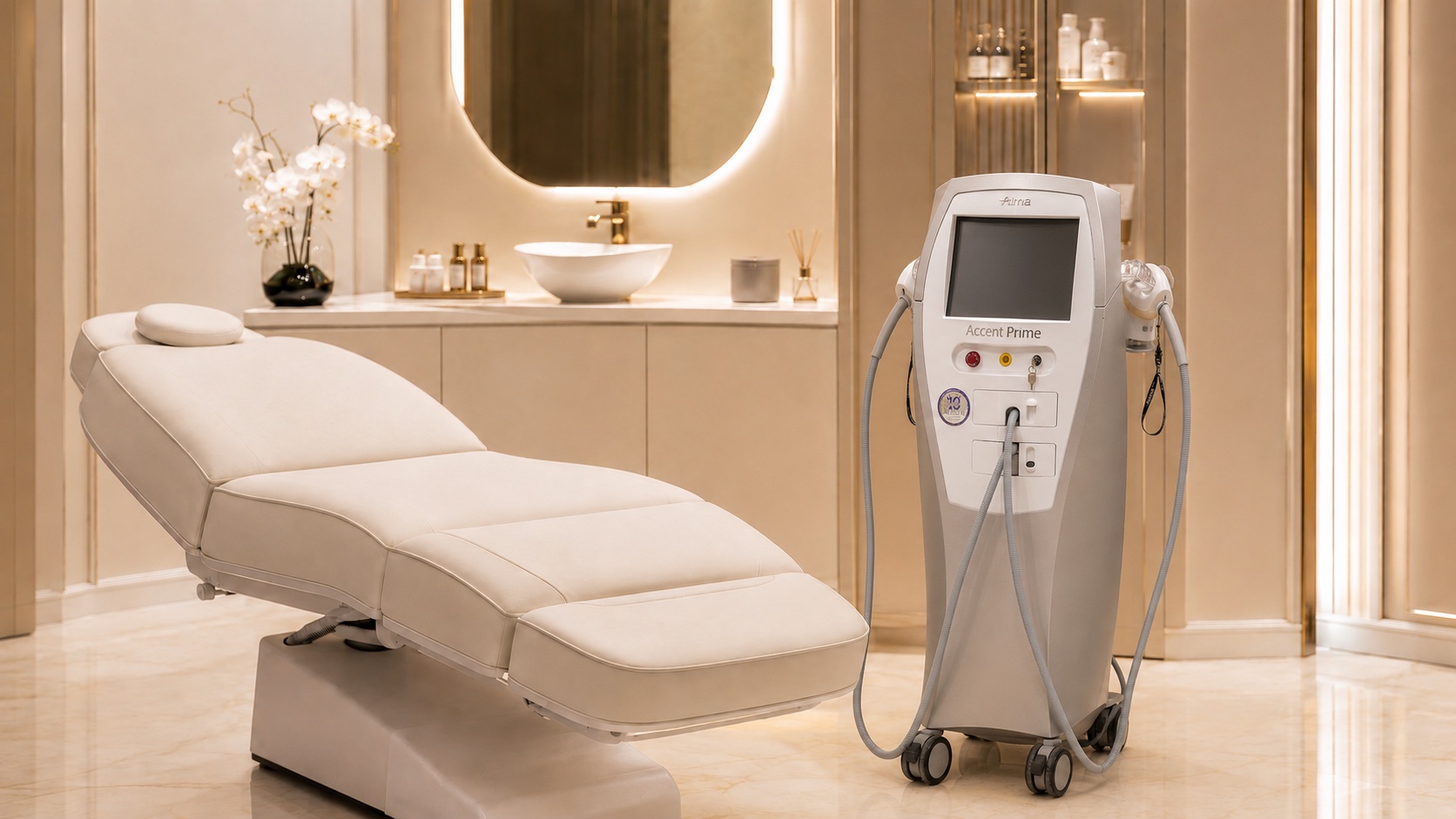
Acne medications in Baku — what gets prescribed, and when
Baziron AC, Curiosin, Aknecutan, Roaccutane and tretinoin are the acne products people search for most in Baku. Below: what each one is, which form of acne it works on, what to expect from it, and where the line sits beyond which you need a prescription and a dermatologist watching. Paramed does not sell medication — this is an information page and an invitation to book.
Book a Treatment
Leave your contact details, and our specialist will contact you for a consultation and booking.
- ✅ Individual program selection
- ✅ Price clarification by areas
- ✅ Answers to all medical questions
By clicking 'Send', you consent to the processing of personal data in accordance with our privacy policy.
Why the same product works for one person and not another
ParamedAcne is not one disease but several mechanisms at once: excess sebum, disrupted shedding at the follicle opening, overgrowth of Cutibacterium acnes, and inflammation. Each product hits a different link. Benzoyl peroxide (Baziron AC) targets the bacterium; retinoids (adapalene, tretinoin) target the blockage; isotretinoin (Aknecutan, Roaccutane) targets the sebaceous gland itself; Curiosin supports healing and mild inflammation. That is why a "spot treatment" bought on an internet recommendation works only some of the time — it may simply not be aimed at your mechanism. What follows is not a prescription but a map: what you are dealing with, and the point at which a doctor stops being optional.
What the clinic does that a pharmacy cannot
Paramed- ✅ Establishes the form and severity of the acne — the whole plan follows from it
- ✅ Distinguishes acne from rosacea, demodicosis and perioral dermatitis, which are treated differently
- ✅ Sets the retinoid strength and ramp-up schedule so the skin does not burn in week two
- ✅ Supervises isotretinoin with blood tests and a cumulative-dose calculation
- ✅ Adds what no pharmacy can: laser acne therapy, peels, extractions
- ✅ Handles post-acne — the marks and scars that medication will no longer touch
How a dermatology appointment for acne goes
ParamedThe doctor examines the skin, counts lesions, and establishes the form — comedonal, papulopustular or nodular — and the severity. They go through what you have already tried and how your skin reacted: half of all failures come not from the "wrong product" but from starting too fast and quitting during the retinoid purge. They look at the contributing factors — hormones, medication, the routine you currently use. The output is a plan for 3–4 months: topicals with a clear ramp-up schedule, systemic therapy and blood work if needed, plus in-clinic procedures. The follow-up is at 4–6 weeks, because judging the effect sooner is meaningless.
What is on the pharmacy shelf and how it works
ParamedBenzoyl peroxide (Baziron AC, 2.5 / 5 / 10 %) is an antiseptic, not an antibiotic: resistance does not develop to it, which is why it is often used to cover an antibiotic course. It works on inflammatory lesions — papules and pustules. It bleaches fabric, so keep your pillowcase and towel white. Starting at 2.5–5 % is sensible: 10 % is no more effective and irritates more. Adapalene (Differin and equivalents) is a third-generation retinoid, available without prescription in most pharmacies, and the mainstay for comedones and rough-textured skin. Tretinoin is stronger and more irritating, and needs careful introduction and strict SPF. Curiosin (zinc hyaluronate) is a gentle healing agent for isolated lesions and post-squeeze marks, but it does not treat acne on its own. Azelaic acid is the compromise for sensitive skin, rosacea and pregnancy. Oral isotretinoin (Aknecutan, Roaccutane) is the only agent that durably shrinks the sebaceous gland itself — strictly prescription-only, with mandatory monitoring.
- Benzoyl peroxide (Baziron AC) — inflammatory acne, no resistance risk
- Adapalene — comedones and blockage, the baseline over-the-counter therapy
- Tretinoin — stronger than adapalene, and noticeably more irritating
- Azelaic acid — sensitive skin, rosacea, pregnancy
- Curiosin (zinc hyaluronate) — healing, not acne treatment
- Isotretinoin (Aknecutan, Roaccutane) — severe acne, prescription only
If you are already using something
Paramed- Bring the packaging of everything you use — skincare and supplements included
- Do not stop something another doctor prescribed before your visit
- Photograph your skin before starting — memory is unreliable a month later
- Say if you are planning a pregnancy: it changes the list of options
- Introduce a retinoid gradually: twice a week, then alternate days, then daily
- A flare in weeks 2–4 of a retinoid is expected and not a reason to stop
- SPF 30–50 daily throughout a retinoid course and after peels
- Benzoyl peroxide and a retinoid at different times of day, not layered together
- Do not judge results before 8–12 weeks
FAQ
Paramed? Where can I buy Baziron AC in Baku and what does it cost? ⌄
Benzoyl peroxide is sold in Baku pharmacies under several brand names including Baziron AC; the price depends on the pharmacy and the strength. Paramed does not sell medication — the clinic sets the plan and explains which strength and schedule suit you, so the purchase is not wasted.
? How is Aknecutan different from Roaccutane? ⌄
The active substance is the same: isotretinoin. Aknecutan's formulation gives higher bioavailability, so the equivalent dose in milligrams is lower. Choosing between them and calculating the cumulative dose is the doctor's job; correctly dosed, they are comparable in effect.
? Does Curiosin help with spots? ⌄
Curiosin (zinc hyaluronate) heals isolated lesions and post-squeeze marks well and dries them slightly. But it does not touch the causes of acne — not sebum, not blockage, not the bacterium. As a sole treatment for widespread acne it does not work.
? Can I start tretinoin on my own? ⌄
Technically yes, but tretinoin is where people most often burn their skin and abandon treatment. It needs a gradual ramp-up, the right strength, strict SPF, and the understanding that a flare in weeks 2–4 is expected. That is five minutes of explanation at an appointment and saves two lost months.
? How soon will I see results? ⌄
Topical therapy: first shifts at 4–6 weeks, a fair verdict at 12. Isotretinoin: improvement usually from month two, with a course averaging 5–8 months by cumulative dose. Nothing treats acne faster than this — promises of "two weeks" are worth ignoring.
? Does laser treatment for acne work? ⌄
Yes, as part of the plan rather than instead of it. Laser acne therapy on the Harmony XL Pro reduces inflammation and bacterial load — 50 AZN per 100 cm² area. It combines well with topicals and is especially useful for people who cannot take systemic drugs.
? What about post-acne marks and scars? ⌄
That is a separate job, and acne medication does not solve it. Post-inflammatory marks respond to peels and a routine with SPF; atrophic scars need a fractional laser or microneedling. It makes sense to start on post-acne once the active breakouts are already under control.
Book
ParamedBook with the dermatologist: they will establish the form of your acne, review what you are already using, and build a 3–4 month plan — topicals, a prescription where warranted, and procedures.
Book a dermatology appointment →Laser acne treatment
ParamedIsotretinoin: when it is genuinely warranted
ParamedAknecutan and Roaccutane are the same isotretinoin; they differ in formulation and bioavailability — Aknecutan absorbs better, so its milligram doses are lower for the same cumulative exposure. It is prescribed for nodulocystic acne, acne that is already scarring, and cases where topical therapy and antibiotics have produced nothing over 3–4 months. It is not a just-in-case spot pill: it requires liver-function and lipid monitoring, is absolutely incompatible with pregnancy, and rules out laser hair removal, resurfacing and medium-depth peels for the whole course plus six months after. The course is measured not in weeks but in cumulative dose per kilogram — that figure is what determines the chance of relapse. All of which means one thing: isotretinoin should be prescribed and supervised by a dermatologist, not by a pharmacy counter.
What not to do
Paramed- ⚠️ Take isotretinoin without a prescription, blood tests and contraception — risk of severe birth defects
- ⚠️ Combine a systemic retinoid with laser hair removal, resurfacing or medium peels
- ⚠️ Use retinoids during pregnancy or while trying to conceive
- ⚠️ Run months-long antibiotic courses without benzoyl peroxide cover
- ⚠️ Squeeze nodules and cysts — that is precisely how atrophic scars form
- ⚠️ Strip the skin with alcohol toners: sebum output rises in response
Why Paramed
ParamedAcne appointments are run by a dermatologist rather than an aesthetician — which matters, because prescription therapy and the differential against rosacea, demodicosis and perioral dermatitis are a dermatologist's responsibility. The clinic has everything the plan gets built out with: laser acne therapy on Harmony XL Pro, peels, extractions, dermatoscopy, and for post-acne, fractional lasers and Legato. The clinic sells no medication and has no commercial stake in it: the plan is built around the problem, not around a shelf.
Our doctors
Certified specialists at Paramed
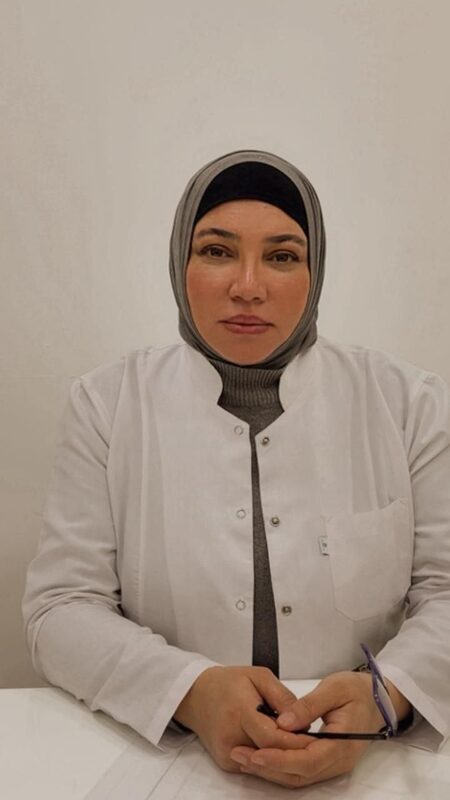
Rena Nasibova
Cosmetologist (MD)
25+ years' experience
1999 · Azerbaijan Medical University · +1 cert.
Languages: Russian, Azerbaijani
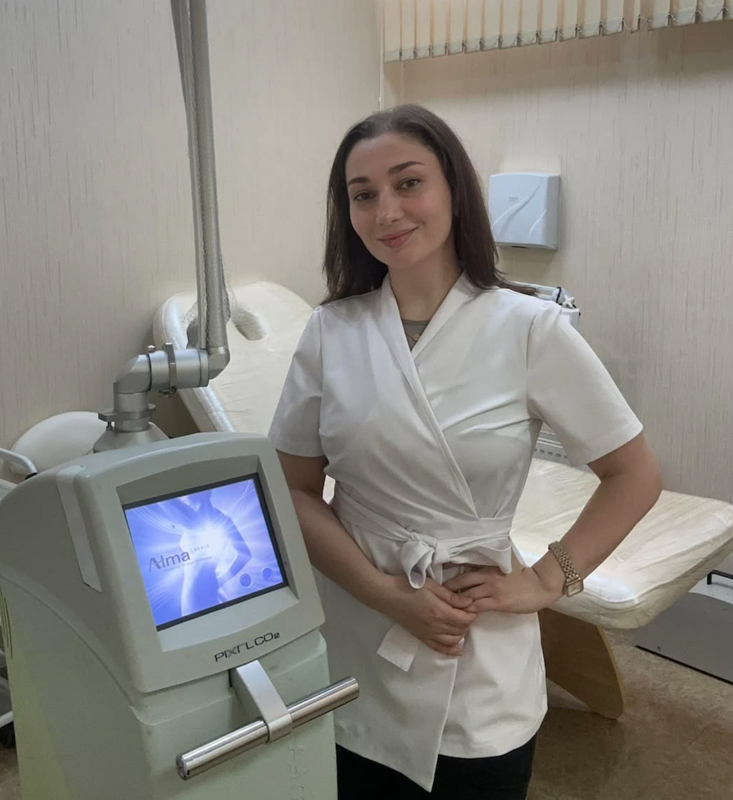
Simona Muradova
Cosmetologist (MD)
2019 · Yaroslavl Medical University · +1 cert.
Languages: Russian, Azerbaijani
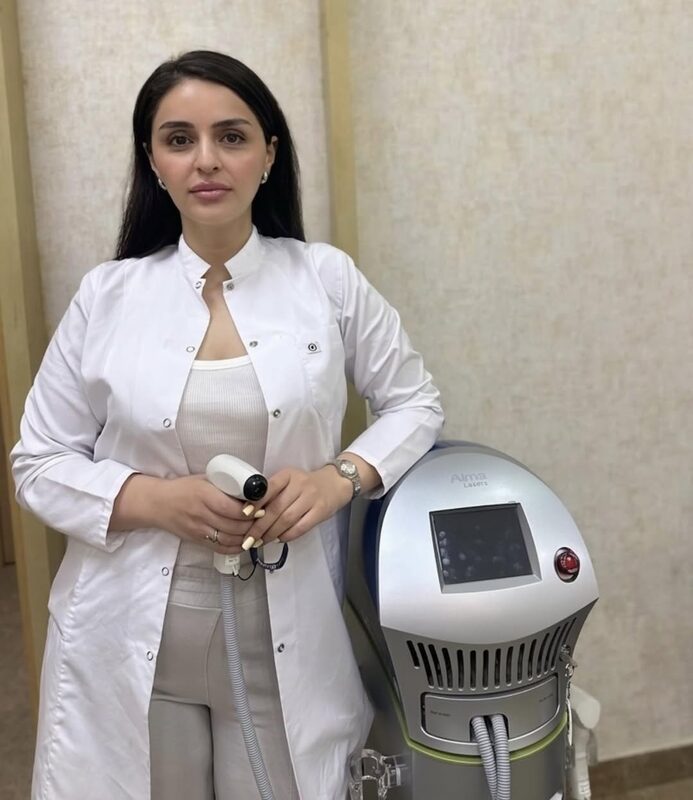
Aybeniz Mammedli
Dermatologist (MD)
2017 · Donetsk National Medical University · +1 cert.
Languages: Russian, Azerbaijani