Xanthelasma removal in Baku
Book a Treatment
Leave your contact details, and our specialist will contact you for a consultation and booking.
- ✅ Individual program selection
- ✅ Price clarification by areas
- ✅ Answers to all medical questions
By clicking 'Send', you consent to the processing of personal data in accordance with our privacy policy.
Overview
ParamedXanthelasma are flat, yellowish plaques that appear on the eyelid skin, most often near the inner corner of the eye. They are made up of cholesterol and lipid deposits, so they are benign growths: they don't hurt and don't turn malignant, but they are visible on the face and can grow over time. At the Paramed clinic in Baku we remove xanthelasma with a laser — precisely, with no incisions and no rough scarring. The procedure always starts with a consultation: the doctor examines the eyelids, assesses the size and depth of the plaques and selects the right method. Because xanthelasma is often linked to a lipid metabolism disorder, when indicated we recommend a cholesterol and lipid panel — this lowers the chance of recurrence.
Benefits
ParamedBenefits of xanthelasma removal at Paramed: 1. High laser precision in the delicate eyelid area. 2. No incisions, minimal scarring risk. 3. Local anaesthesia and comfort during the procedure. 4. Short recovery period. 5. Guidance on preventing recurrence and controlling cholesterol.
How it works
ParamedHow the procedure goes: 1. Consultation and eyelid examination, assessing the size and depth of the plaques. 2. When indicated — a recommendation to have a cholesterol test. 3. Cleansing of the skin and local anaesthesia. 4. Layer-by-layer laser removal of the xanthelasma. 5. Treatment of the area and detailed aftercare guidance.
Technology
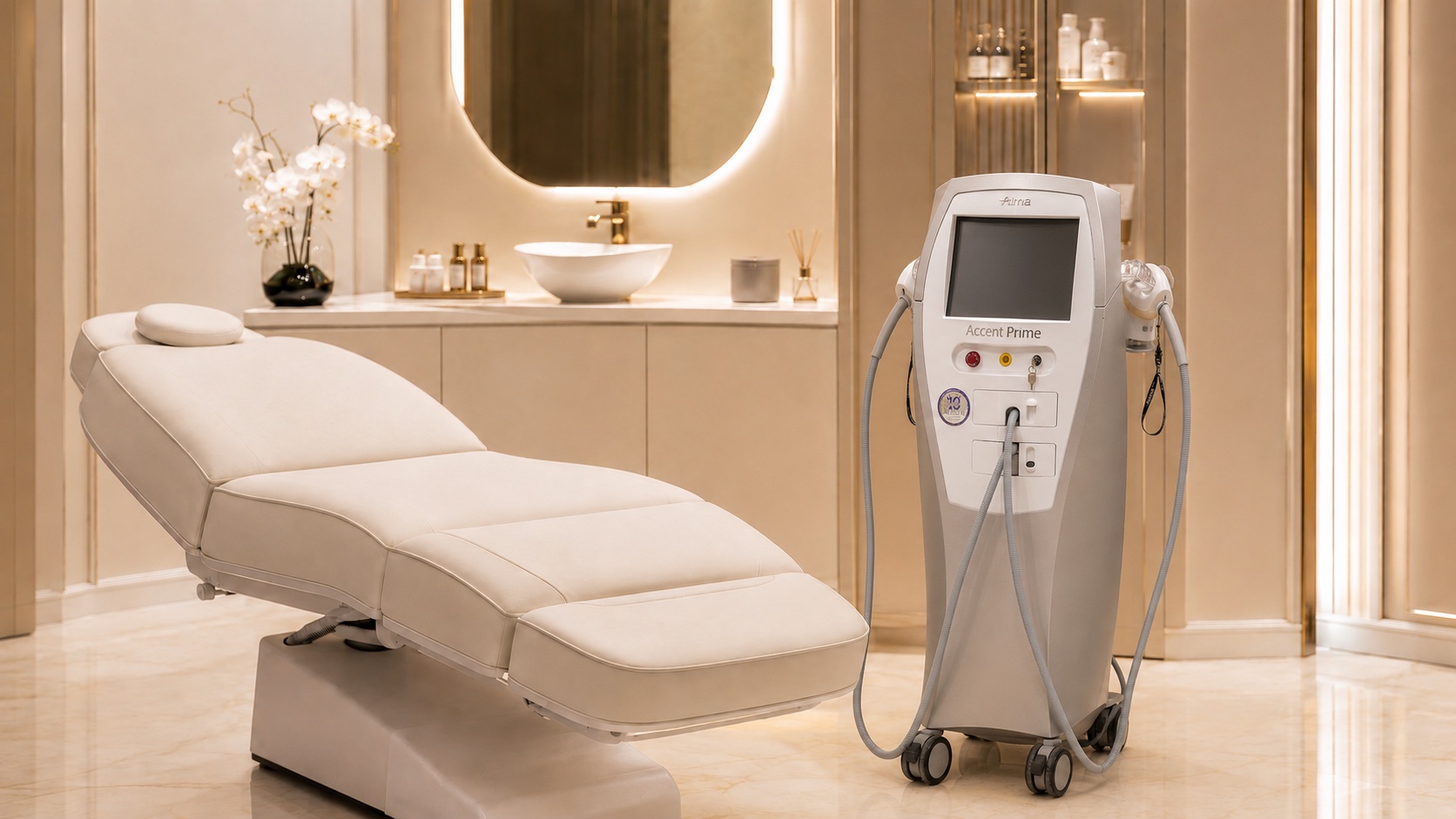
ParamedTo remove xanthelasma we use the lasers of the Harmony XL Pro platform (Alma Lasers, Israel) — the erbium (Er:YAG) laser and, when needed, the CO2 laser. The laser vaporises the plaque tissue layer by layer with high precision, which is critical in the delicate eyelid area next to the eye. The beam acts only on the treated spot and barely affects the surrounding skin, so healing is faster and the risk of scarring or pigment change is minimal. The doctor controls the depth on every pass based on the size and density of the plaque.
- Platform: Harmony XL Pro (Alma Lasers, Israel)
- Methods: erbium laser (Er:YAG), CO2 laser when needed
- Mechanism: layer-by-layer laser vaporisation of cholesterol deposits
- Why it matters: high precision in the eyelid area, minimal trauma to the skin
- Safety: depth control, low scarring risk
Preparation & aftercare
Paramed- Tell the doctor about any anticoagulants and chronic conditions.
- If you are prone to herpes, let the doctor know — prophylaxis may be needed.
- Avoid tanning and strong sun for a few days before the procedure.
- Do not apply makeup to the eyelids on the day of the procedure.
- Have a cholesterol and lipid panel done when indicated.
- Do not wet or rub the treated area for the first day.
- Do not pick the crust that forms — let it come off on its own.
- Use the wound-healing product prescribed by the doctor.
- Avoid eyelid makeup until fully healed.
- Protect the skin from the sun and use SPF after healing.
- Skip the sauna, pool and intense workouts for a few days.
FAQ
Paramed? What is xanthelasma and is it dangerous? ⌄
It's a benign cholesterol deposit on the eyelid skin. On its own it isn't dangerous and doesn't turn malignant, but it can be a sign of a lipid metabolism disorder, so it's worth checking your cholesterol level.
? Is laser removal of xanthelasma painful? ⌄
The procedure is done under local anaesthesia, so you only feel mild discomfort. The eyelid area is sensitive, and anaesthesia keeps you comfortable throughout the session.
? Will there be a scar? ⌄
Laser vaporisation is layer-by-layer and precise, so the risk of a noticeable scar is minimal. A temporary crust forms at the site and comes off on its own as it heals.
? How long does healing take? ⌄
The crust usually comes off within 7–14 days. Redness in the treated area may last a little longer and fades gradually.
? Can xanthelasma come back? ⌄
Yes, especially if cholesterol stays high. Controlling lipid metabolism and follow-up with a doctor lower the risk of recurrence.
? How many sessions does it take to remove xanthelasma? ⌄
Small plaques are often removed in one session. Large or multiple ones may need a repeat procedure after healing.
Booking
ParamedBook a consultation at the Paramed clinic — the doctor will examine your eyelids, choose the method to remove the xanthelasma and explain how to keep it from coming back.
Benign lesion removal (by indication)
ParamedCourse plan
ParamedIn most cases small xanthelasma are removed in a single session. Large, dense or multiple plaques may need a repeat procedure once the skin has fully healed — usually after 4–6 weeks. The exact plan is set by the doctor at the examination.
Contraindications
Paramed- ⚠️ Pregnancy and breastfeeding
- ⚠️ Active inflammatory or infectious processes in the eyelid area
- ⚠️ Active herpes flare-up
- ⚠️ Blood clotting disorders, use of anticoagulants
- ⚠️ Decompensated diabetes mellitus
- ⚠️ Tendency to form keloid scars
Comparison
ParamedLaser removal of xanthelasma is more precise and gentle than traditional methods — surgical excision, chemical treatment with trichloroacetic acid (TCA), or electrocoagulation. The laser works contact-free and layer by layer, which matters especially on the thin eyelid skin: lower risk of scarring, bleeding and lid-margin distortion. That said, no method removes the cause — without controlling cholesterol levels, the plaques can reappear.
Why Paramed
ParamedThe Paramed clinic in Baku removes xanthelasma on the modern Harmony XL Pro platform. The procedure is performed by experienced specialists who work delicately in the eyelid area and support the patient through every stage — from examination to full healing.
Our doctors
Certified specialists at Paramed
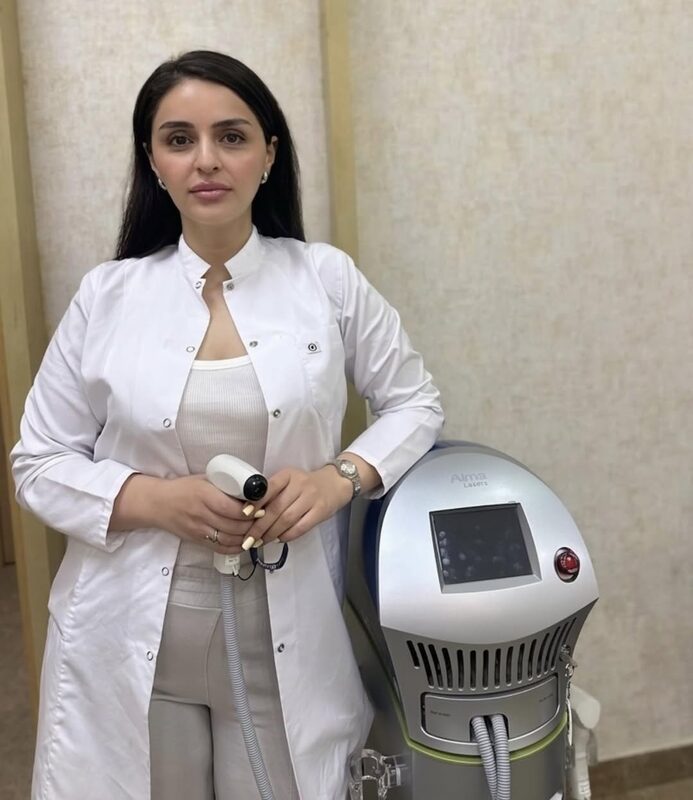
Aybeniz Mammedli
Dermatologist (MD)
2017 · Donetsk National Medical University · +1 cert.
Languages: Russian, Azerbaijani
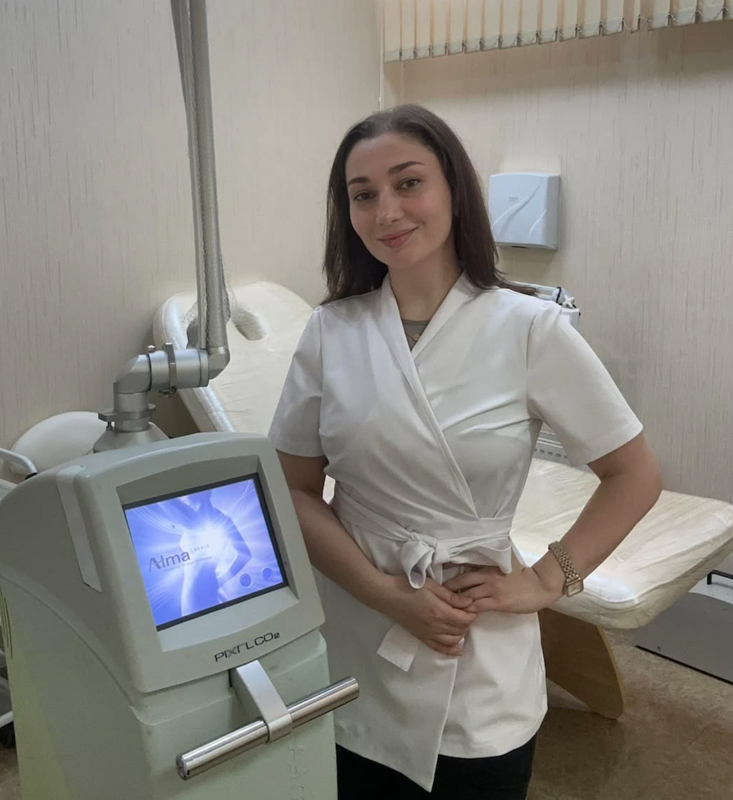
Simona Muradova
Cosmetologist (MD)
2019 · Yaroslavl Medical University · +1 cert.
Languages: Russian, Azerbaijani
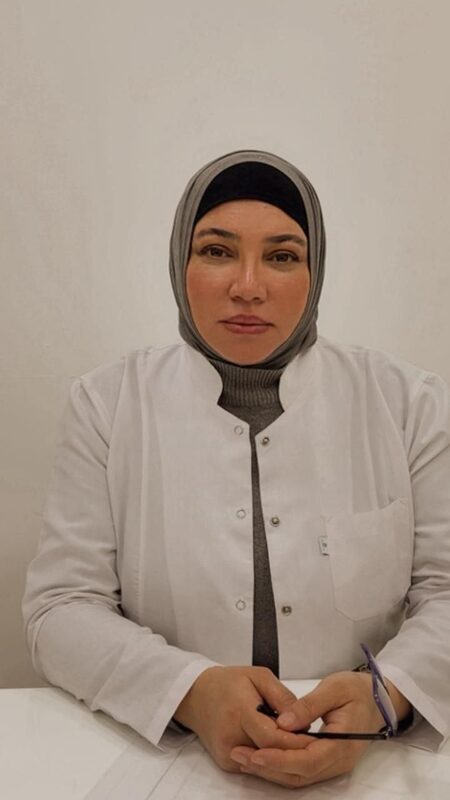
Rena Nasibova
Cosmetologist (MD)
25+ years' experience
1999 · Azerbaijan Medical University · +1 cert.
Languages: Russian, Azerbaijani