Postpartum hair loss
In the first months after giving birth many women notice far more hair in the brush and the shower. Most often this is diffuse shedding, but iron deficiency, the thyroid or androgenetic alopecia can sit behind it too. We start with trichoscopy and choose what you can do right now, while breastfeeding.
Book a Treatment
Leave your contact details, and our specialist will contact you for a consultation and booking.
- ✅ Individual program selection
- ✅ Price clarification by areas
- ✅ Answers to all medical questions
By clicking 'Send', you consent to the processing of personal data in accordance with our privacy policy.
Why hair falls out after childbirth
ParamedIn the first months after giving birth many women find more hair in the brush, on the pillow and in the shower drain. Most often the shedding is diffuse: hair thins evenly across the whole head rather than in patches. There can be several causes, and they often add up: the changes after pregnancy and birth, low iron and ferritin, thyroid problems, low vitamin D, strict diets, stress and lack of sleep. Sometimes childbirth simply makes visible a problem that started earlier, such as androgenetic alopecia. These conditions look alike but are treated differently, so we start with trichoscopy, not with procedures.
When to see a trichologist
Paramed- ✅ Much more hair than usual in the brush, on the pillow and in the shower
- ✅ Your parting has widened and the scalp is starting to show
- ✅ Patches without hair have appeared
- ✅ Itching, flaking, dandruff or an oily scalp
- ✅ Androgenetic alopecia runs in your family
- ✅ You want to know the cause and what you can do while breastfeeding
How the appointment goes
ParamedFirst the doctor asks when you gave birth, whether you are breastfeeding, when the shedding started, how you eat and what medication you take. Then trichoscopy: under magnification the doctor sees hair density, shaft thickness and the state of the scalp. This separates diffuse postpartum shedding from androgenetic alopecia, seborrhoea and other conditions — they cannot be told apart by eye. If needed, the doctor orders blood tests: ferritin, a full blood count, TSH, vitamin D and, when indicated, a hormone panel. You leave with a two-stage plan: what we do now, while you are breastfeeding, and what can be added once breastfeeding is over.
What you can do while breastfeeding
ParamedWe do not perform injectable procedures — mesotherapy, PRP, polynucleotides, exosomes — while you are breastfeeding. That does not mean you simply have to wait. Part of the plan starts straight away: trichoscopy, blood tests if the doctor orders them, LED phototherapy for the scalp and home care. LED phototherapy involves no injections: the scalp is treated with light. The doctor decides after the examination whether you need it and how many sessions. Hair care products are chosen by the doctor to suit your scalp and the type of shedding.
- Trichoscopy — 50 AZN, video trichoscopy with saved images — 100 AZN
- Blood tests ordered by the doctor: ferritin, full blood count, TSH, vitamin D
- LED phototherapy for the scalp — 25 AZN per session, no injections
- Hair care products — chosen by the doctor
- Follow-up trichoscopy at 3–4 months — compared image by image
Preparation & aftercare
Paramed- Do not wash your hair on the day — trichoscopy reads better on unwashed hair
- No oils, serums or styling products on the day of the examination
- Bring blood test results from the last 6 months if you have them
- Think back to what was happening 2–3 months before the shedding began
- Do not colour your hair for 3–5 days before the appointment
- Use the hair care products the doctor chose for you
- Do the blood tests you were given and bring the results to the follow-up
- Attend LED phototherapy on the schedule the doctor set
- Come back for follow-up trichoscopy at 3–4 months for comparison
- When you stop breastfeeding, discuss with the doctor whether an injectable course is needed
Frequently asked questions
Paramed? Can I have hair mesotherapy while breastfeeding? ⌄
No. Pregnancy and breastfeeding are contraindications to injectable procedures: mesotherapy, PRP, polynucleotides and exosomes. During this time you can have trichoscopy, do blood tests, and start LED phototherapy and the care the doctor chooses. The doctor sets the start of an injectable course after breastfeeding ends.
? What can I do about hair loss while breastfeeding? ⌄
Have trichoscopy (50 AZN) to find the cause; do the blood tests the doctor orders; have LED phototherapy for the scalp (25 AZN per session) — a procedure without injections; use the hair care products the doctor chooses. The doctor decides on each procedure after the examination.
? Is it normal to lose this much hair after giving birth? ⌄
Hair loss after childbirth happens to many women and is most often diffuse. But a similar picture appears with iron deficiency, thyroid problems and androgenetic alopecia. They cannot be told apart by eye — trichoscopy shows which it is.
? Which blood tests do I need? ⌄
The doctor orders tests after the examination. Most often these are ferritin, a full blood count, TSH and vitamin D, and a hormone panel when indicated. Iron deficiency without anaemia, an underactive thyroid and low vitamin D are the commonest reversible causes of hair loss in women, and treating them with scalp injections is pointless.
? How much does trichoscopy cost? ⌄
Trichoscopy is 50 AZN and video trichoscopy is 100 AZN. With video trichoscopy the images are saved, so after 3–6 months the result can be compared objectively.
? Who performs trichoscopy? ⌄
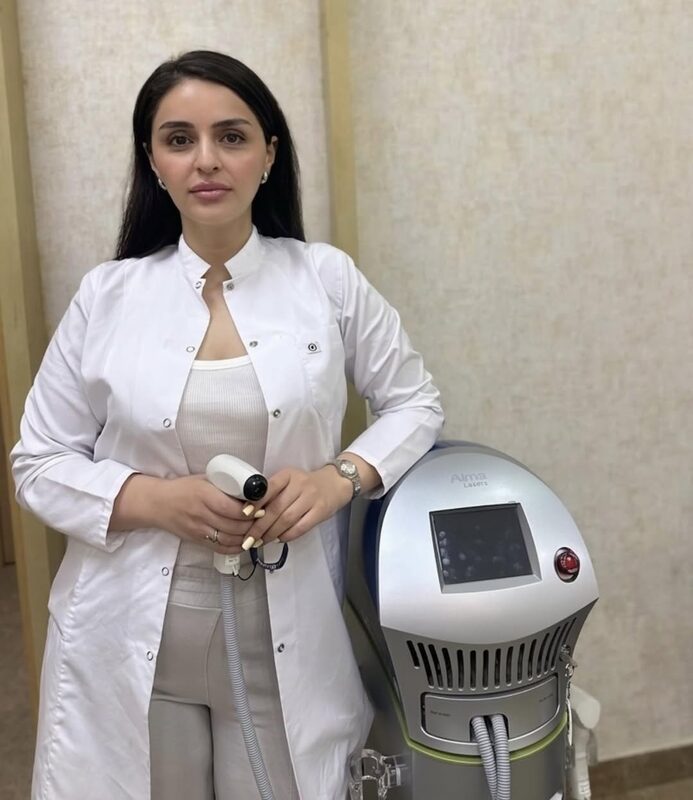
Trichoscopy is performed by dermatologist Dr. Aybeniz Mammedli.
? Does LED phototherapy help? ⌄
LED phototherapy treats the scalp with light and involves no injections, so the doctor can include it in the plan for the breastfeeding months. Whether you need it and how many sessions to have, the doctor decides after trichoscopy.
? Will my hair grow back? ⌄
We will not promise new hair growth. What we can do is find the cause, correct what can be corrected (iron deficiency, for example) and assess progress with follow-up trichoscopy at 3–4 months.
Booking
ParamedBook a trichoscopy: the doctor will find the cause of the shedding and build a plan for the breastfeeding months and after.
Book a trichoscopy →Diagnostics and trichology — prices
ParamedAfter breastfeeding
ParamedOnce breastfeeding is over, the doctor can add injectable methods to the plan if they are still needed: hair mesotherapy (50–70 AZN per session), PRP / plasmolifting (60–80 AZN), scalp polynucleotides — PhilArt SCALP (300–380 AZN) and Plinest (320–400 AZN), and hair exosomes (from 250 AZN). The doctor decides when to start the course. With the right treatment the first change is usually less shedding; progress is assessed by follow-up trichoscopy at 3–4 months. We do not promise new hair growth.
Contraindications to injectable methods
Paramed- ⚠️ Pregnancy and breastfeeding — for most injectable methods
- ⚠️ Cancer, blood disorders
- ⚠️ Clotting disorders and anticoagulants
- ⚠️ Active inflammation or pustules on the scalp
- ⚠️ Uncontrolled diabetes
- ⚠️ Autoimmune disease in a flare — needs sign-off
Why Paramed
ParamedThe appointment starts with trichoscopy, not with selling a course: if the cause is systemic, you will be told to check your ferritin and TSH. Trichoscopy is done by a dermatologist and video-trichoscopy images are saved, so results can be compared objectively. For the breastfeeding months we offer what can be done without injections, and plan any injectable course for after.
Our doctors
Certified specialists at Paramed
Aybeniz Mammedli
Dermatologist (MD)
2017 · Donetsk National Medical University · +1 cert.
Languages: Russian, Azerbaijani
Elvira Zakiyeva
Cosmetologist (MD)
15+ years' experience
2008 · Azerbaijan Medical University · +1 cert.
Languages: Russian, Azerbaijani
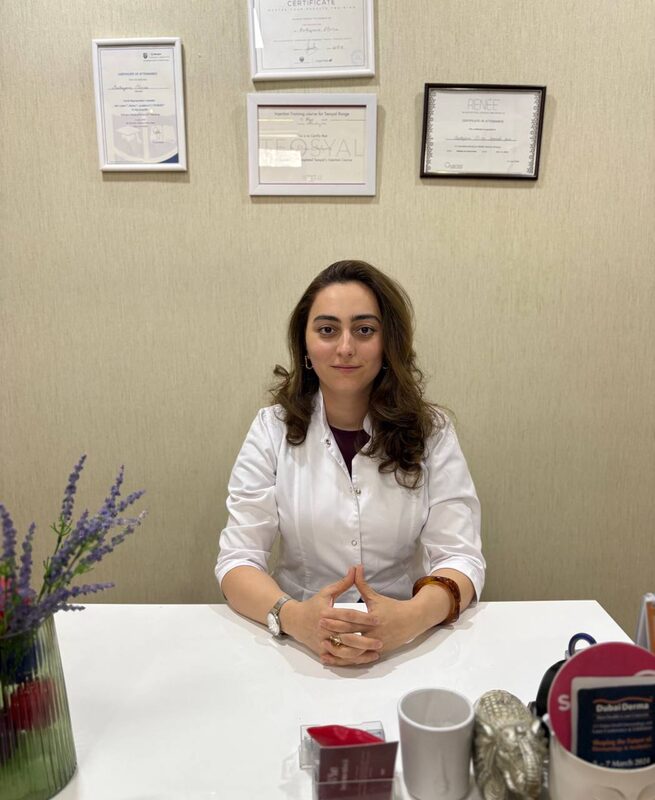
Elmira Jamalova
Cosmetologist (MD)
2009 · Tashkent Medical Academy · +2 cert.
Languages: Russian, Azerbaijani