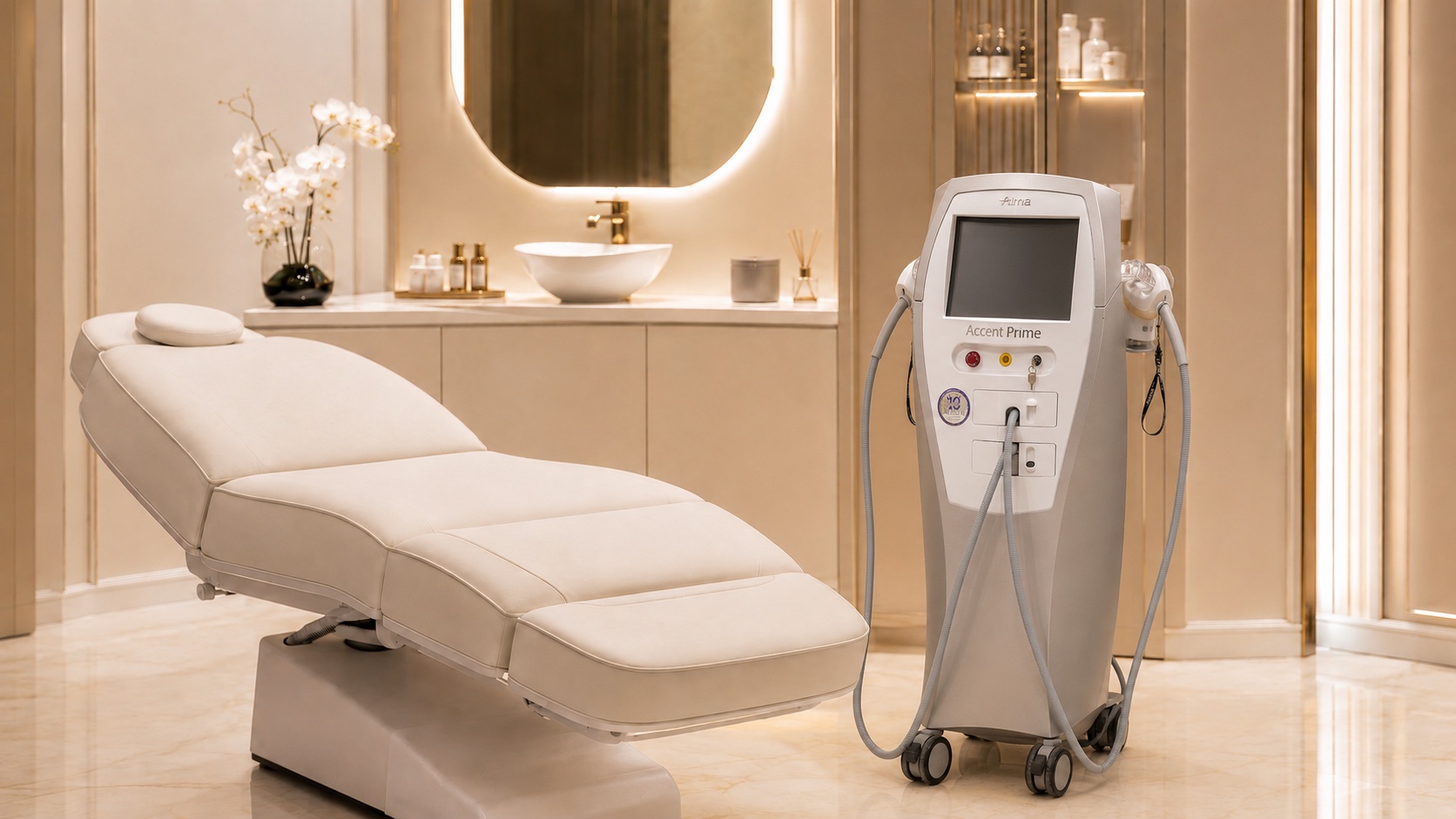
PicoSure / PicoWay vs Harmony Q-Switched: tattoo & pigment removal in Baku
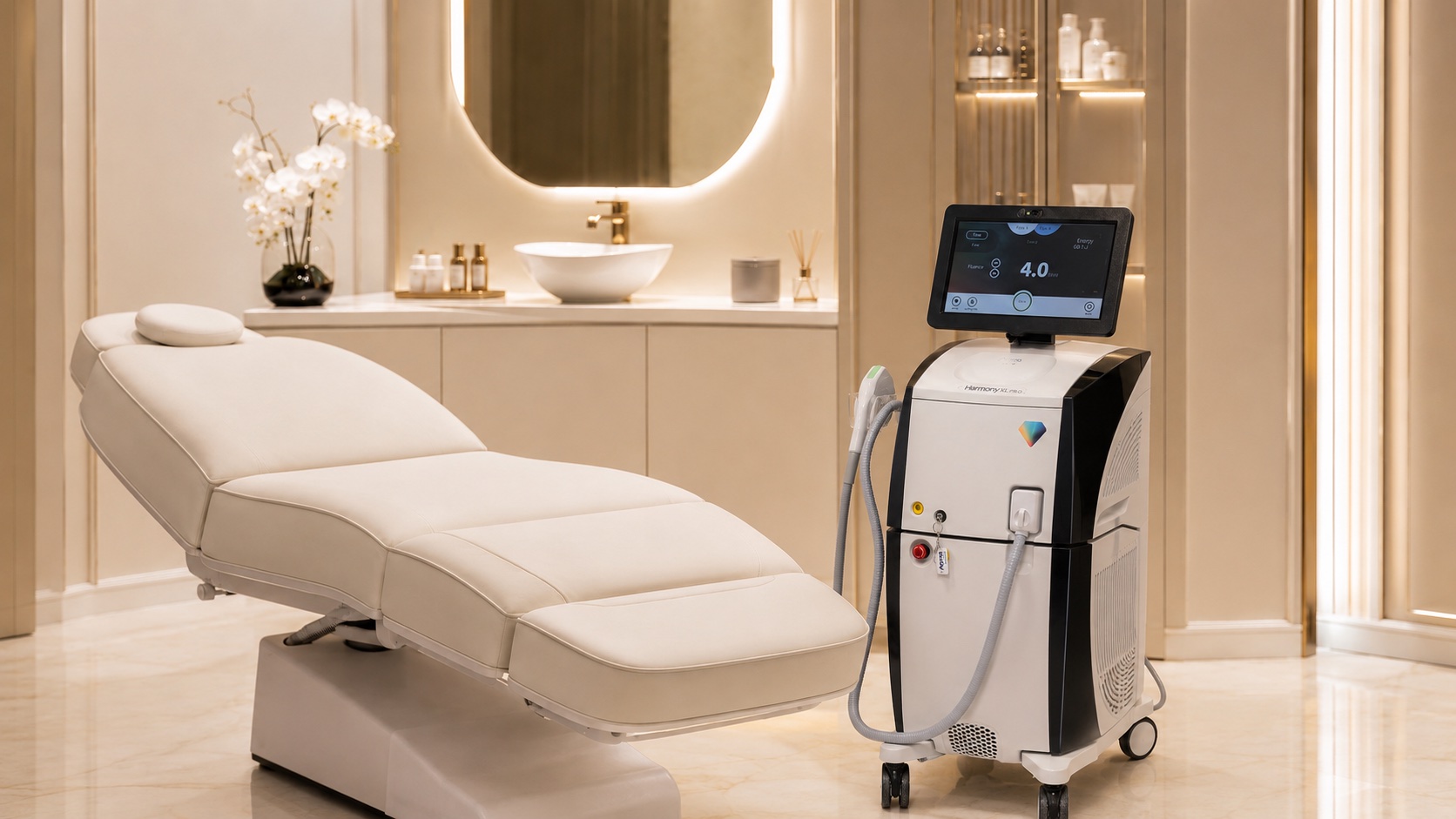
PicoSure (Cynosure) and PicoWay (Candela) are picosecond lasers for tattoo and pigment removal. At Paramed we use Alma Harmony XL Pro with a Q-Switched Nd:YAG handpiece (nanosecond mode) for these tasks.
Procedure video
Tattoo removalWatch on YouTube ↗
Book a Treatment
Leave your contact details, and our specialist will contact you for a consultation and booking.
- ✅ Individual program selection
- ✅ Price clarification by areas
- ✅ Answers to all medical questions
By clicking 'Send', you consent to the processing of personal data in accordance with our privacy policy.
The comparison in brief
ParamedPicosecond lasers — PicoSure (Cynosure), PicoWay (Candela), Picocare, Discovery Pico (Quanta) — deliver pulses in the picosecond range (10⁻¹² s). They are effective for multi-color tattoos, permanent makeup and stubborn pigment. In Baku they're searched as "pico laser tattoo removal", "PicoSure price", "PicoWay Baku". At Paramed we don't use picosecond lasers as standalone platforms — for tattoo, permanent makeup and pigmentation removal we use Alma Harmony XL Pro with a Q-Switched Nd:YAG handpiece (nanosecond mode). Pico and Q-Switched share a similar principle (photomechanical fragmentation of pigment particles), but pulse duration differs. Contraindications apply.
When Q-Switched is enough, when pico makes sense
Paramed- ✅ Q-Switched: black, blue, dark tattoos of any size
- ✅ Q-Switched: pigment spots (lentigo, melasma, post-inflammatory)
- ✅ Q-Switched: brow and lip permanent makeup
- ✅ Pico makes sense: stubborn multicolor tattoos, light colors after several failed sessions
- ✅ Pico makes sense: professional tattoos with deep pigment and complex inks
How we evaluate a tattoo
ParamedAt the consultation the doctor assesses: size, colors, pigment depth and density, skin type (phototype), scarring, tattoo age (older fades easier), professional vs amateur. The Harmony Q-Switched protocol is set accordingly: wavelength, power, pass count. If you've had several sessions elsewhere (including a pico laser) without complete clearance, bring before/after photos — they help assess residual pigment.
Pico vs nano (Q-Switched) — the difference
ParamedQ-Switched Nd:YAG works at two wavelengths: 1064 nm (black and blue inks) and 532 nm (red, orange, yellow). Pulse duration is a few nanoseconds (10⁻⁹ s). This heats pigment particles and fragments them photomechanically. Picosecond lasers (PicoSure, PicoWay) operate at comparable wavelengths (755 nm on PicoSure, 532/1064 nm on PicoWay) with pulses 100–1000× shorter. That delivers more mechanical, less thermal fragmentation, and works better on stubborn, light and multicolor tattoos. Q-Switched is time-tested and effective for most tasks with the right protocol; pico is a premium segment that noticeably reduces session count on complex cases.
- Q-Switched Nd:YAG — nanosecond pulse, 1064 / 532 nm
- PicoSure — picosecond, 755 nm + 532/1064 nm with handpieces
- PicoWay — picosecond, 532 / 785 / 1064 nm
- Harmony Q-Switched — photomechanical effect, proven approach
- All — pigment fragmentation followed by macrophage clearance
FAQ
Paramed? Do you have PicoSure or PicoWay? ⌄
No — we don't use standalone picosecond lasers (PicoSure by Cynosure, PicoWay by Candela). For tattoo, permanent makeup and pigmentation removal at Paramed we use Alma Harmony XL Pro with the Q-Switched Nd:YAG handpiece (nanosecond mode, 1064 / 532 nm).
? Is a pico laser always better than Q-Switched? ⌄
Not always. For black and blue tattoos on light skin, Q-Switched Nd:YAG works effectively. Pico has an advantage in complex cases: multicolor tattoos, stubborn light inks, professional tattoos with deep pigment. For most tasks, Q-Switched delivers good results at a reasonable price.
? How many sessions to remove a tattoo? ⌄
Usually 5–10 sessions at 6–8 week intervals. Exact count depends on size, color palette, pigment depth, tattoo age and pigment quality. Pico may reduce session count in complex cases.
? Can a color tattoo be removed on Harmony Q-Switched? ⌄
Yes, but red/yellow/orange are removed with the 532 nm wavelength (requires more energy), and green and light blue are the hardest for any nano laser. For very complex multicolor tattoos a pico laser may be more efficient, but Q-Switched will still get results across more sessions.
? Is tattoo removal painful? ⌄
Sensation is comparable to a light rubber band snap. Cooling and topical anesthesia (if needed) are applied. Sessions are short — typically 5–30 minutes depending on tattoo size.
? Will I have a scar after tattoo removal? ⌄
With the right protocol, scar risk is minimal. Old superficial tattoos can leave a temporary hypopigmented patch (fades over 3–12 months). Deep tattoos from non-professional artists may carry higher risk — assessed at consultation.
? Can only part of a tattoo be removed (cover-up prep)? ⌄
Yes — partial fading before a cover-up is a common task. Usually 2–4 sessions for quality cover-up preparation.
Book a consultation
ParamedIf you've been weighing pico laser vs Q-Switched — come in. We'll assess the tattoo and give a realistic course plan and pricing.
Book a consultation →Tattoo and PMU removal
ParamedPicoSure / PicoWay / Harmony Q-Switched
Paramed- Picosecond pulse — less thermal impact
- Works well on blue, green, light inks
- Suited for stubborn tattoos after several unsuccessful sessions
- Fewer sessions in complex cases
- Substantially higher per-session cost
- Not always justified for fresh black tattoos — Q-Switched works fine
- Three wavelengths (532 / 785 / 1064 nm)
- Suited for tattoos on different body areas and phototypes
- Can also be used for pigment removal and rejuvenation
- Pricier than Q-Switched
- Premium not critical for basic tasks
- Proven approach for most tattoos and pigment
- Two wavelengths (1064 / 532 nm)
- Part of Harmony XL Pro in the same clinic
- Session price significantly lower than pico lasers
- Complex multicolor or light tattoos may need more sessions
- Slightly more thermal impact vs pico
Course plan
ParamedTattoo removal course: usually 5–10 sessions at 6–8 week intervals. Black tattoos on light skin — closer to 5–7; multicolor and old — 8–12+. Permanent makeup — 3–6 sessions. Pigment spots — 2–5 sessions. Results develop gradually: pigment is cleared by macrophages over 4–8 weeks after each session.
Contraindications
Paramed- ⚠️ Pregnancy and breastfeeding
- ⚠️ Active tan in the area
- ⚠️ Oncological conditions
- ⚠️ Fresh skin damage in the area
- ⚠️ Uncontrolled diabetes
- ⚠️ Photosensitizing medications
- ⚠️ Keloid tendency
- ⚠️ Tattoo pigment allergy (rare)
Why Harmony Q-Switched at Paramed
Paramed- 📍 Harmony XL Pro platform with Q-Switched Nd:YAG handpiece
- 📍 Experienced specialists, individualized protocol
- 📍 Reasonable per-session price — full course stays within budget
- 📍 Possibility to combine with other Harmony handpieces if needed
- 📍 Free consultation to assess the tattoo and plan
Our doctors
Certified specialists at Paramed

Elvira Zakiyeva
Cosmetologist (MD)
15+ years' experience
2008 · Azerbaijan Medical University · +1 cert.
Languages: Russian, Azerbaijani
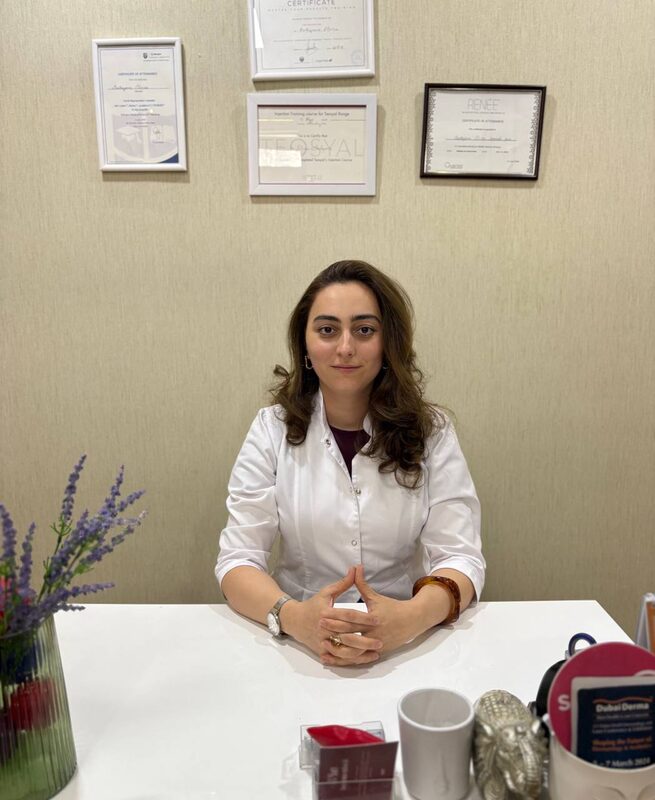
Elmira Jamalova
Cosmetologist (MD)
2009 · Tashkent Medical Academy · +2 cert.
Languages: Russian, Azerbaijani
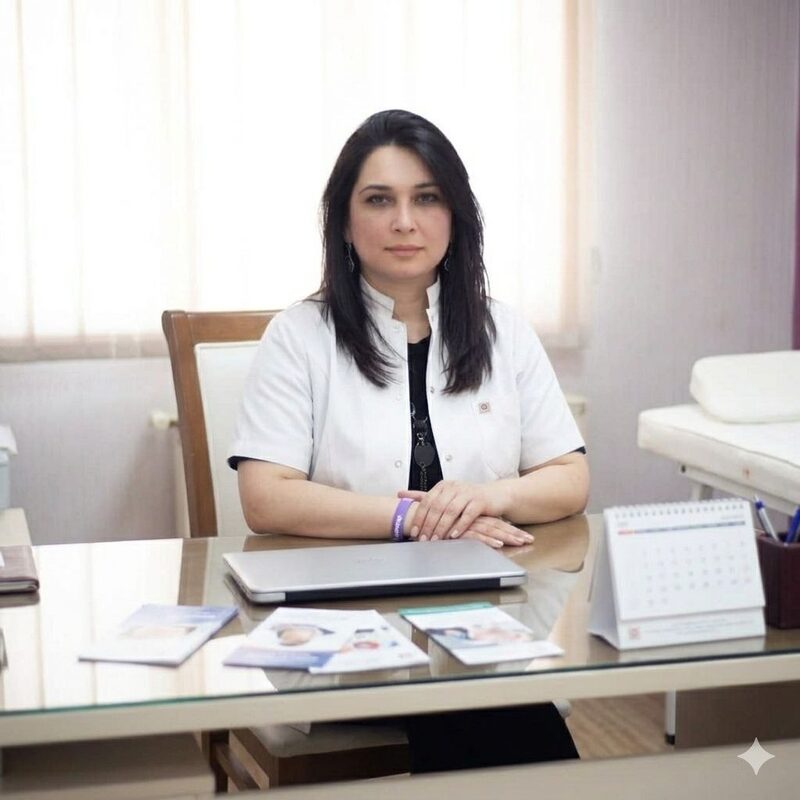
Afa Mammadova
Cosmetologist (MD)
27+ years' experience
1997 · Azerbaijan Medical University · +1 cert.
Languages: Russian, Azerbaijani