ClearLift vs Fraxel: which laser rejuvenation approach to choose in Baku
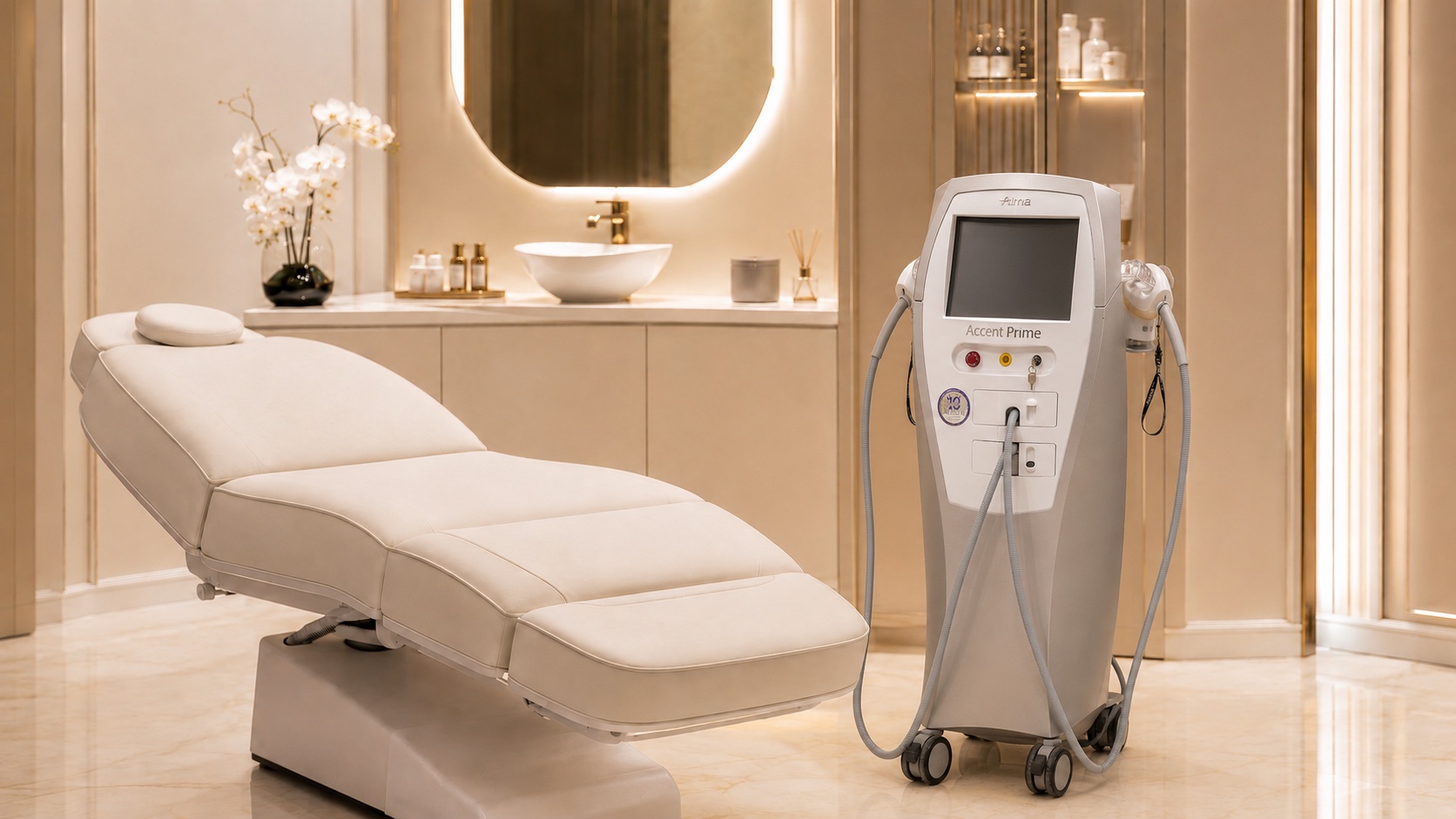
Fraxel is Solta Medical's well-known fractional laser — patients in Baku often search for "Fraxel rejuvenation", "Fraxel face" and "Fraxel price". Paramed doesn't run Fraxel as a standalone platform — we use a different approach on Harmony XL Pro (Alma Lasers): ClearLift, a Q-Switched Nd:YAG 1064 nm mode that is non-fractional and has no downtime. If you specifically want a fractional scenario, we also have Erbium iPixel and Pixel CO2. Here's how they compare.
Book a Treatment
Leave your contact details, and our specialist will contact you for a consultation and booking.
- ✅ Individual program selection
- ✅ Price clarification by areas
- ✅ Answers to all medical questions
By clicking 'Send', you consent to the processing of personal data in accordance with our privacy policy.
The comparison in brief
ParamedClearLift and Fraxel represent two different approaches to laser rejuvenation, not "two devices of the same class". Fraxel is Solta Medical's well-known fractional laser: it creates microscopic treatment zones (MTZs) in the skin, around which renewal is triggered. Two main versions exist: Fraxel Re:store (non-ablative, 1550 nm + 1927 nm) and Fraxel Re:pair (ablative CO2). The effect is visible but requires a recovery period (redness, peeling). ClearLift is a Q-Switched Nd:YAG 1064 nm mode on the Harmony XL Pro platform (Alma Lasers): non-ablative, non-fractional rejuvenation that works via a photoacoustic effect in the dermis without damaging the epidermis. The effect is cumulative; there's no downtime — which is why ClearLift is often called "lunchtime rejuvenation". At Paramed the main device for gentle rejuvenation is ClearLift; for a fractional scenario we run Erbium iPixel and Pixel CO2. Contraindications apply.
Why we emphasize ClearLift at Paramed — and how we cover the Fraxel scenario differently
Paramed- ✅ One of the few centers in Baku running ClearLift on Harmony XL Pro (Alma Lasers)
- ✅ No downtime — a real "lunchtime rejuvenation" scenario
- ✅ Safe across all phototypes (including IV–VI) thanks to the 1064 nm wavelength
- ✅ Can be done year-round without post-procedure pigmentation risk
- ✅ If a Fraxel-style fractional scenario is what you need — we run Erbium iPixel and Pixel CO2
- ✅ Combined protocols are possible: ClearLift + peel + mesotherapy
How we pick between ClearLift and a fractional scenario
ParamedAt consultation the specialist assesses phototype on the Fitzpatrick scale, skin condition (tone, texture, pores, pigmentation, wrinkles, scars), any tan and prior experience. If the goal is tone, refreshing the complexion, gentle work on dullness and superficial pigmentation — especially for darker-skinned or active-lifestyle patients — we choose ClearLift. If the goal is meaningful work on deep wrinkles, atrophic scars or textural defects and the patient is open to a few days of recovery, we discuss Erbium iPixel or Pixel CO2 (our fractional Fraxel analogues). These approaches are often combined: one deeper fractional procedure per year plus ClearLift support between seasons.
How ClearLift and Fraxel work
ParamedFraxel uses a fractional laser principle: the beam is split into hundreds of micro-points, each creating a deep microscopic channel of thermal damage (MTZ — Microscopic Treatment Zone). Tissue between these points is preserved — that's what enables rapid recovery around each MTZ. Fraxel Re:store operates at 1550 nm (Er:Glass) and 1927 nm (Thulium) — non-ablative, without removing the epidermis. Fraxel Re:pair is an ablative CO2 fractional laser, deeper and more dramatic. ClearLift is a completely different idea: a nanosecond-duration Q-Switched Nd:YAG 1064 nm pulse passes through the epidermis and acts in the dermis via a photoacoustic effect — stimulating fibroblasts and collagen renewal without damaging the skin barrier. So ClearLift leaves no "grid" of micro-points, no peeling, no significant redness.
- ClearLift — Q-Switched Nd:YAG 1064 nm, non-ablative, non-fractional, no epidermal damage
- ClearLift triggers dermal renewal through a photoacoustic effect
- Fraxel — fractional laser: hundreds of microscopic treatment zones (MTZs)
- Fraxel Re:store: non-ablative, 1550 + 1927 nm. Fraxel Re:pair: ablative CO2
- At Paramed: ClearLift on Harmony XL Pro; fractional alternatives — Erbium iPixel and Pixel CO2
FAQ
Paramed? Does Paramed have Fraxel? ⌄
Not as a standalone Solta Fraxel platform. We do run fractional alternatives from the same generation: Erbium iPixel (non-ablative fractional, conceptually close to Fraxel Re:store) and Pixel CO2 (ablative fractional CO2, conceptually close to Fraxel Re:pair). For gentle, non-fractional rejuvenation we use ClearLift on Harmony XL Pro.
? Which is more powerful — ClearLift or Fraxel? ⌄
These are different mechanisms, so "more powerful" isn't quite the right framing. Fraxel works fractionally — creating microscopic thermal damage zones around which renewal occurs. The per-session effect is stronger, but there's downtime. ClearLift works photoacoustically through the epidermis — it doesn't damage the surface, has a cumulative effect across a series of sessions, and produces no peeling.
? How many ClearLift sessions do I need? ⌄
A typical course is 4–6 sessions at 2–4 week intervals, followed by maintenance sessions every 1–3 months. Exact numbers depend on the starting skin condition and your goal.
? Can ClearLift be done in summer? ⌄
Yes. ClearLift is non-ablative and doesn't damage the epidermis; the 1064 nm wavelength carries minimal post-procedure hyperpigmentation risk. Fraxel-style scenarios (especially Re:pair / Pixel CO2) are usually avoided during peak tan.
? Is ClearLift suitable for dark skin? ⌄
Yes. Q-Switched Nd:YAG 1064 nm reacts little with skin melanin, so ClearLift is safe for phototypes IV–VI. Ablative fractional approaches (Fraxel Re:pair, Pixel CO2) carry more restrictions on dark skin.
? Can ClearLift be combined with other treatments? ⌄
Yes. ClearLift pairs well with superficial peels, facial cleansing and injectable protocols (biorevitalization, mesotherapy). The specific sequence and intervals are designed by the specialist.
? How much is ClearLift at Paramed? ⌄
Full face — 300 AZN, half face — 150 AZN, one-third face — 100 AZN. Erbium iPixel (fractional) — 400 AZN for the full face. The full price list is in the "Pricing" block above.
Book a consultation — we'll match you to ClearLift, Erbium iPixel or Pixel CO2
ParamedAt consultation the specialist will assess phototype and skin condition and propose a specific scenario: ClearLift, fractional Erbium iPixel or Pixel CO2 — or a combination. We'll show you the equipment and explain what to expect from each approach.
Book a consultation →ClearLift and Fraxel — pros and cons
Paramed- No downtime — no peeling, no grid-pattern redness
- Suits all phototypes including dark skin (1064 nm is safe for skin melanin)
- Can be done year-round, including summer
- Works well on skin tone, texture and dullness
- Cumulative effect — natural look, no "flat-surface" appearance
- Compatible with peels, facial cleansing and injectables
- Per-session effect is gentler than an ablative fractional procedure
- Deep wrinkles and atrophic scars are not its primary use case
- A series of treatments is needed (typically 4–6 sessions at 2–4 week intervals)
- Doesn't replace daily skincare and SPF between sessions
- Strong effect in fewer sessions
- Re:pair (CO2) addresses deep wrinkles and atrophic scars well
- Re:store covers texture, pores and superficial pigmentation
- Well-known brand with extensive clinical experience
- Downtime — redness, peeling, sometimes weeping micro-points (Re:pair)
- Restrictions on dark phototypes (especially Re:pair)
- Not done in summer or with active tan
- Per-session price is noticeably higher
- Not available as a standalone platform at Paramed — analogues: Erbium iPixel, Pixel CO2
Rejuvenation — face
Paramed- Full face 200 AZN
- Half face 100 AZN
- One-third face 80 AZN
- Full face 300 AZN
- Half face 150 AZN
- One-third face 100 AZN
- Full face 300 AZN
- Half face 150 AZN
- One-third face 100 AZN
- Face 120 AZN
- Neck 75 AZN
- Décolleté 75 AZN
- Face + Neck + Décolleté 199 AZN
- Full face 400 AZN
- Half face 200 AZN
- One-third face 150 AZN
- Full face 300 AZN
- Half face 150 AZN
- One-third face 100 AZN
- Full face 300 AZN
- Half face 150 AZN
- One-third face 100 AZN
- Full face 150 AZN
- Half face 100 AZN
- One-third face 75 AZN
Course plan
ParamedA ClearLift course is typically 4–6 procedures at 2–4 week intervals, with maintenance sessions every 1–3 months. A fractional scenario (Erbium iPixel / Pixel CO2) is typically 1–3 procedures at 4–6 week intervals with a longer recovery window between sessions. SPF and basic skincare between procedures are essential.
Contraindications (common)
Paramed- ⚠️ Pregnancy and lactation
- ⚠️ Active tan (especially for ablative fractional procedures)
- ⚠️ Oncological conditions
- ⚠️ Inflammation, active eruptions, herpes in the area
- ⚠️ Decompensated diabetes
- ⚠️ Photosensitizing medication
- ⚠️ Fresh tattoos in the treatment area
- ⚠️ Epilepsy (case-by-case)
What Paramed runs for laser rejuvenation
Paramed- 📍 ClearLift on Harmony XL Pro — Q-Switched Nd:YAG 1064 nm, no downtime
- 📍 Erbium iPixel — non-ablative fractional laser (analogue of Fraxel Re:store)
- 📍 Pixel CO2 — ablative fractional CO2 (analogue of Fraxel Re:pair)
- 📍 Experienced specialists who design combined protocols
- 📍 All core Alma Lasers technologies under one roof
Our doctors
Certified specialists at Paramed
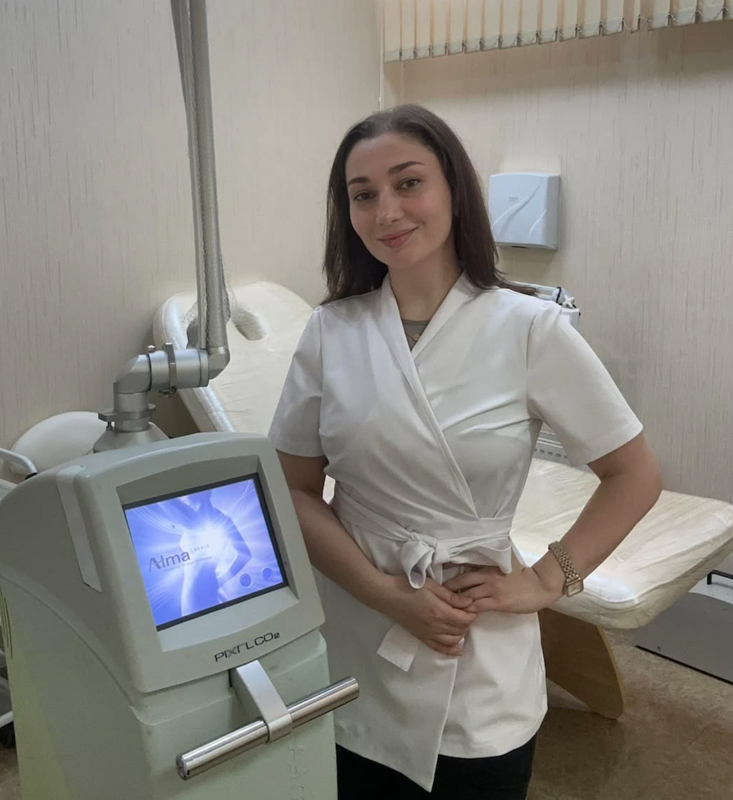
Simona Muradova
Cosmetologist (MD)
2019 · Yaroslavl Medical University · +1 cert.
Languages: Russian, Azerbaijani
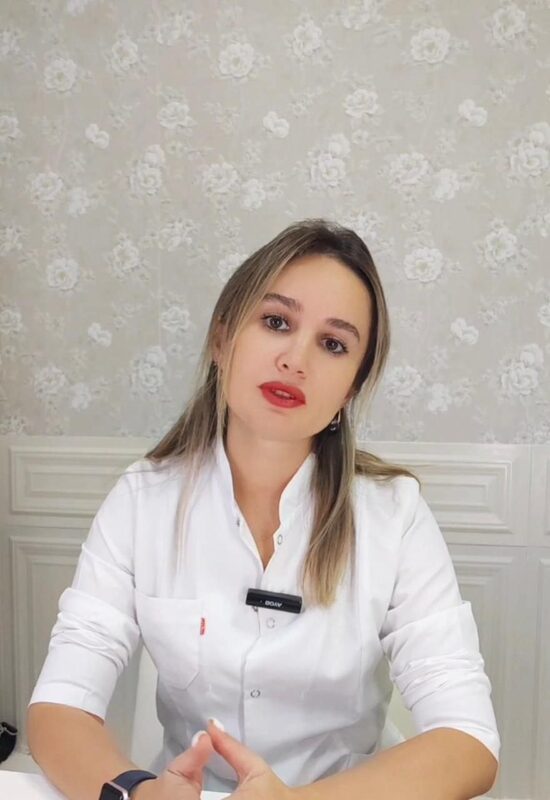
Elvira Zakiyeva
Cosmetologist (MD)
15+ years' experience
2008 · Azerbaijan Medical University · +1 cert.
Languages: Russian, Azerbaijani
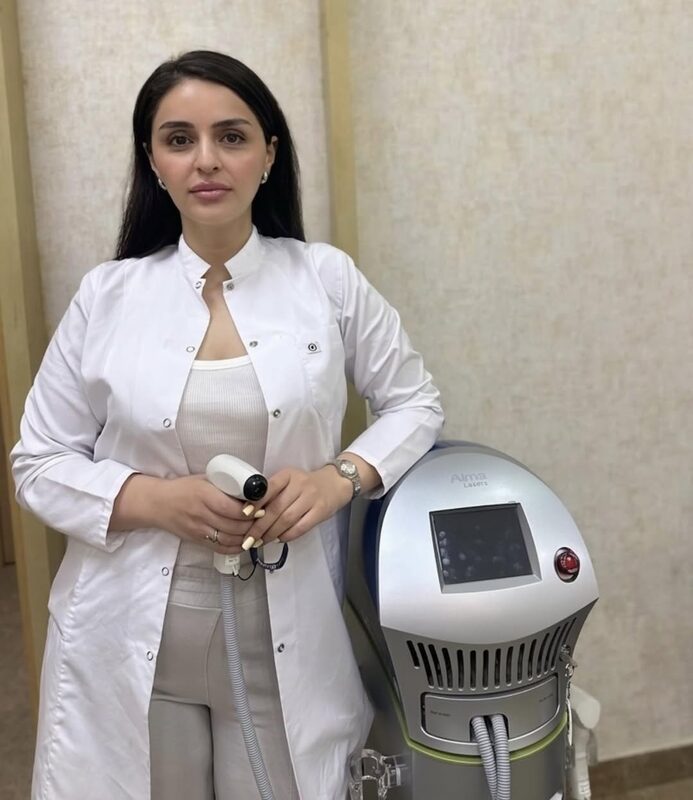
Aybeniz Mammedli
Dermatologist (MD)
2017 · Donetsk National Medical University · +1 cert.
Languages: Russian, Azerbaijani