Exosomes vs PRP for hair — what to choose in Baku
PRP — your plasma with platelet growth factors. Exosomes — standardized nanovesicles from stem cells. PRP is cheaper, exosomes are stronger in effect. In practice, they are often combined rather than opposed.
Procedure video
PRP for hairVideo page →Watch on YouTube ↗
Book a Treatment
Leave your contact details, and our specialist will contact you for a consultation and booking.
- ✅ Individual program selection
- ✅ Price clarification by areas
- ✅ Answers to all medical questions
By clicking 'Send', you consent to the processing of personal data in accordance with our privacy policy.
Brief comparison
ParamedPRP (platelet-rich plasma) — injections of your own plasma with a platelet concentration 3–5 times higher than normal. Platelets release growth factors (PDGF, IGF-1, EGF, VEGF) that activate hair follicles. Exosomes are standardized nanovesicles 30–150 nm, derived from adipose stem cells (ASCE+ HRLV) or umbilical stem cells (BENEV). They carry growth factors (VEGF, IGF-1, KGF, HGF), cytokines, and microRNA that activate Wnt/β-catenin signaling pathways — those that transition the follicle from a resting phase to a growth phase. The main difference: PRP is an autologous product, its effect depends on the quality of your blood; exosomes are standardized in composition and dosage. PRP is 4–5 times cheaper, but exosomes provide a more pronounced and predictable effect. They are often combined. Contraindications apply.
When to choose what
ParamedPRP is the first-line choice for early alopecia and diffuse hair loss when an affordable course of 4–6 sessions is needed. It is also good for preparing for hair transplantation. Exosomes are the choice for pronounced androgenetic alopecia when maximum effect on dormant follicles is needed; for prolonged hair loss after acute stress; when blood draw is refused. In practice, they are often combined: a course of PRP (4 sessions) + 2 sessions of exosomes for enhancement, or exosomes as a base + supporting PRP. The complete program is selected after trichoscopy.
Autologous plasma vs standardized nanovesicles
ParamedPRP is obtained by centrifuging 10–20 ml of your venous blood. The concentration of platelets in the resulting plasma is 3–5 times higher than normal, and growth factors are released directly from the platelets after activation. The composition and concentration depend on your blood parameters. Exosomes are extracellular vesicles isolated in the laboratory from stem cells. ExoCoBio ASCE+ HRLV — a Korean flagship, 10 billion exosomes + biotin + 1008 growth factors in one vial. BENEV — exosomes from umbilical stem cells. They activate Wnt/β-catenin signaling pathways, transitioning the follicle into the active anagen phase, and suppress DKK-1 — a protein that causes hair miniaturization in androgenetic alopecia.
- PRP: your plasma, centrifugation for 15 minutes
- Exosomes: laboratory product, ready vial
- PRP: composition depends on blood quality
- Exosomes: standardized — each batch is the same
- Exosomes: activate Wnt/β-catenin and suppress DKK-1
- PRP: platelet growth factors, no microRNA
FAQ
Paramed? Which is more effective — exosomes or PRP? ⌄
Exosomes are usually stronger at the signaling level: they activate Wnt/β-catenin and suppress DKK-1, which causes hair miniaturization. PRP provides a 'concentrated cocktail' of platelet growth factors. According to modern studies, exosomes show a more pronounced increase in density, especially in androgenetic alopecia. But they are also significantly more expensive.
? Does Paramed offer RegenLab PRP? ⌄
Yes. Alongside standard PRP there is a premium option — PRP prepared with Swiss RegenLab kits (Regen Lab SA). Blood is drawn in a closed system into RegenBCT glass vacuum tubes containing sodium citrate and a separator gel and centrifuged for 5 minutes at 1500 g — the gel mechanically separates the plasma from the red cells, giving standardised, leucocyte-reduced PRP. RegenLab PRP is priced at consultation; the doctor advises which option suits you.
? Can they be combined in one course? ⌄
Yes, this is a common practice. Usually 4 sessions of PRP + 2 sessions of exosomes, or exosomes as a 'base' + supporting PRP once a month.
? What to choose for severe hair loss? ⌄
In cases of pronounced androgenetic or diffuse alopecia, exosomes provide a more pronounced effect due to their influence on Wnt/β-catenin. However, in severe AGA, neither of them can replace medication therapy.
? Is it painful? ⌄
Both options are tolerated comfortably — the scalp is less sensitive. Cooling is used, and if necessary, a local anesthetic. PRP may be less comfortable due to the blood draw stage.
? When is the result visible? ⌄
Reduction in hair loss — for both after 1–2 sessions. Visible thickening and growth of new hair — within 2–3 months after the end of the course.
Booking
ParamedSchedule a trichoscopy at Paramed — we will assess the condition of your hair and select a program with PRP, exosomes, or their combination.
Exosomes and PRP — pros and cons
Paramed- Autologous — low allergy risk
- Affordable price — 60–80 AZN per session
- Good clinical experience in trichology
- Suitable for early alopecia
- Can be done more frequently without high costs
- Effectiveness depends on blood quality
- Requires blood draw
- Composition is not standardized
- Weaker influence on follicle signaling pathways
- Lower chances of 'waking up' dormant follicles in advanced alopecia
- Standardized dosage — each session is the same
- Strong influence on Wnt/β-catenin and DKK-1
- Awaken dormant follicles — effect on density
- No blood draw required
- Work well for androgenetic and diffuse alopecia
- 4–5 times more expensive than PRP — 250–450 AZN per session
- Fewer clinical studies in trichology (method is newer)
- In cases of severe androgenetic alopecia — medications are needed
Exosomes — ExoCoBio, BENEV, Zishel, Promoitalia
ParamedOur doctors
Certified specialists at Paramed
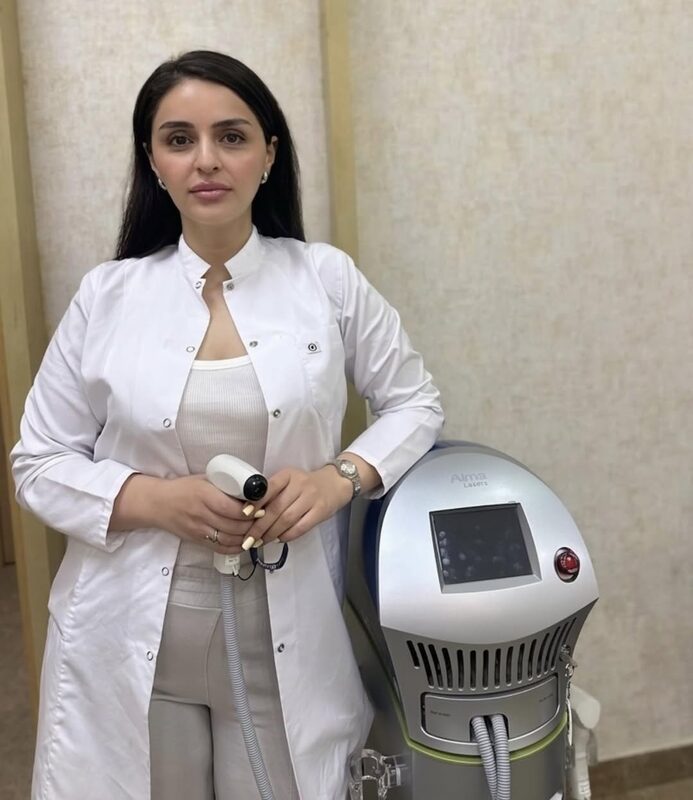
Aybeniz Mammedli
Dermatologist (MD)
2017 · Donetsk National Medical University · +1 cert.
Languages: Russian, Azerbaijani
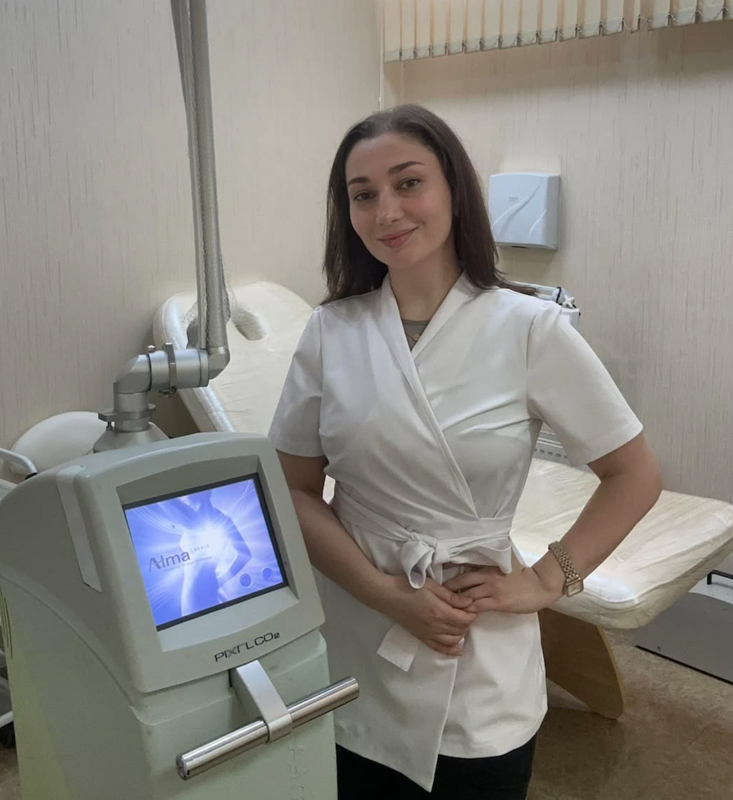
Simona Muradova
Cosmetologist (MD)
2019 · Yaroslavl Medical University · +1 cert.
Languages: Russian, Azerbaijani
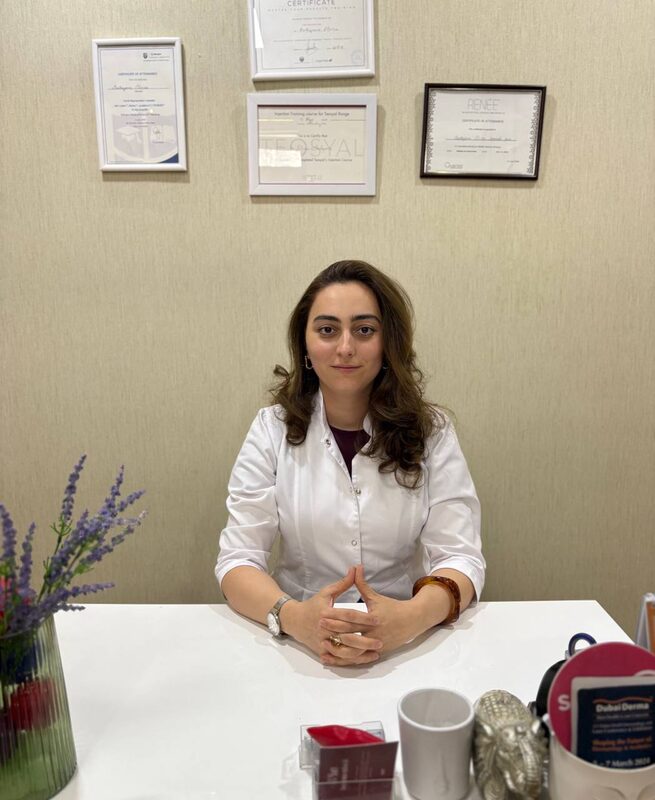
Elmira Jamalova
Cosmetologist (MD)
2009 · Tashkent Medical Academy · +2 cert.
Languages: Russian, Azerbaijani