Alexandrite vs Diode vs Nd:YAG: which laser to choose for hair removal
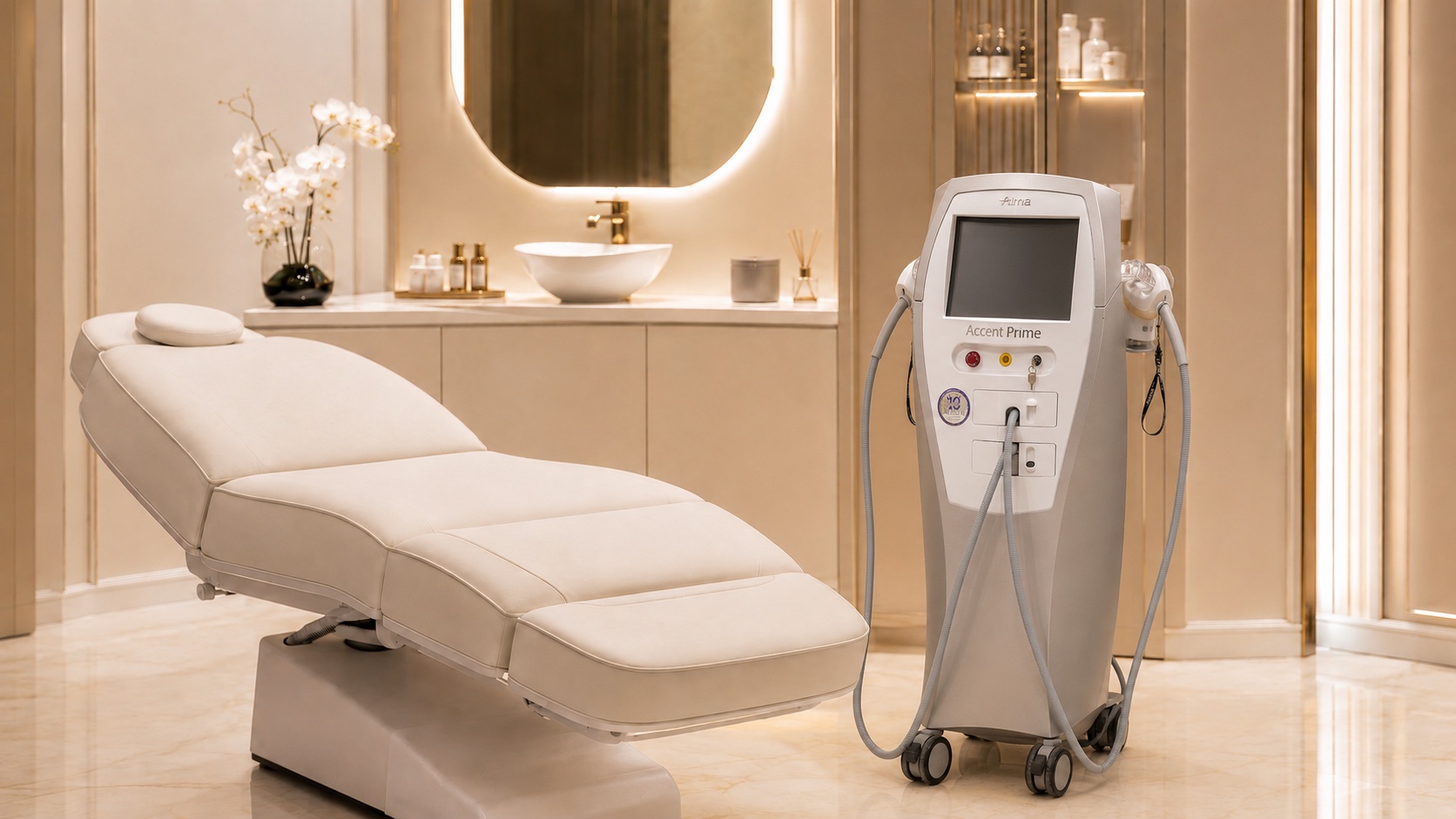
The key factor in choosing a hair-removal laser isn't the device name — it's the wavelength and how it matches your phototype and hair type. At Paramed on Soprano Titanium all three wavelengths (755 / 810 / 1064 nm) work in the same handpiece.
Procedure video
Soprano Titanium laser hair removalWatch on YouTube ↗
Book a Treatment
Leave your contact details, and our specialist will contact you for a consultation and booking.
- ✅ Individual program selection
- ✅ Price clarification by areas
- ✅ Answers to all medical questions
By clicking 'Send', you consent to the processing of personal data in accordance with our privacy policy.
The essentials in brief
ParamedThree main wavelengths are used in laser hair removal: 755 nm (alexandrite), 810 nm (diode) and 1064 nm (Nd:YAG). Each interacts differently with melanin in hair and skin. So choosing the "right" laser isn't really a brand choice (Candela, Cynosure, Lumenis, Alma) — it's a wavelength choice matched to your Fitzpatrick phototype and hair type. Modern platforms (e.g. Alma Soprano Titanium) integrate all three wavelengths in a single handpiece — removing the "either/or" tradeoff. Contraindications apply.
Laser hair removal — women
Paramed- ICE / Platinum 79 AZN
- Titanium 95 AZN
- ICE / Platinum 95 AZN
- Titanium 110 AZN
- Price 18 AZN
- Range 12–18 AZN
- ICE / Platinum 49 AZN
- Titanium 54 AZN
- ICE / Platinum 49 AZN
- Titanium 54 AZN
- ICE / Platinum 20 AZN
- Titanium 25 AZN
- ICE / Platinum 20 AZN
- Titanium 25 AZN
- ICE / Platinum 54 AZN
- Titanium 59 AZN
- ICE / Platinum 35 AZN
- Titanium 40 AZN
- ICE / Platinum 20 AZN
- Titanium 25 AZN
- ICE / Platinum 20 AZN
- Titanium 25 AZN
- ICE / Platinum 20 AZN
- Titanium 25 AZN
- ArmpitsFor packages: +5 AZN5 AZN
Original Soprano platforms (Alma Lasers)
Paramed uses original Soprano ICE, Platinum and Titanium platforms by Alma Lasers (Israel), with original handpieces and safety-first protocols.
How to pick a wavelength in practice
Paramed- ✅ Phototypes I–III: emphasis on alexandrite
- ✅ Phototypes III–IV: emphasis on diode
- ✅ Phototypes IV–VI: emphasis on Nd:YAG
- ✅ Mixed cases: three-wavelength platform
- ✅ Heavy tan: wait for skin recovery or shift to Nd:YAG
How we pick the wavelength at consultation
ParamedThe doctor assesses Fitzpatrick phototype, hair type, color and density, and skin condition (tan, sensitivity, hormonal status). The primary wavelength or combination is matched to this profile. On Soprano Titanium this happens without changing devices — all three wavelengths are available in one handpiece.
How the three wavelengths work
ParamedAlexandrite 755 nm has high melanin selectivity — so it's well absorbed by fine and light hair. Downside: on dark skin it also reacts strongly with epidermal melanin, increasing burn risk on phototypes IV–VI. Diode 810 nm penetrates deeper, is less sensitive to skin melanin and versatile across hair thickness — ideal for the main follicle mass and large areas. Nd:YAG 1064 nm penetrates even deeper and barely reacts with skin melanin — so it's the safest wavelength on dark phototypes (IV–VI) and for deep roots. On Soprano Titanium all three wavelengths fire simultaneously in one handpiece, allowing different hair types to be treated in one session.
- 755 nm (alexandrite) — fine / light hair, light phototypes (I–III)
- 810 nm (diode) — versatile across hair types, large areas, medium phototypes (II–IV)
- 1064 nm (Nd:YAG) — dark skin (IV–VI), deep roots, minimal skin-melanin reaction
- Soprano Titanium — all three wavelengths in one impulse
- ICE contact cooling and In-Motion — comfort during the session
Course plan
ParamedA course runs 5–8 sessions at 4–6 week intervals. Wavelength affects per-session efficiency but doesn't dramatically change the total session count — that's driven by hair type and hormonal status.
Who each wavelength suits
Paramed- Best choice for fine and light hair
- High melanin selectivity
- Suits phototypes I–III
- Good for face, arms, legs on light skin
- Not recommended on dark skin (IV–VI)
- Sensitive to tan and sun
- Weaker on very light (vellus) hair
- Versatile across hair thickness and color
- Good for large areas (legs, back)
- Less phototype-sensitive
- Suits medium phototypes (II–IV)
- Weaker than alexandrite on fine light hair
- On very dark skin (V–VI) yields to Nd:YAG
- Safest on dark phototypes (IV–VI)
- Works on deep roots and coarse hair
- Less reactive to tan
- Suits beard, underarms, bikini for men
- Weaker than alexandrite on fine light hair
- Can feel less comfortable without active cooling
- No "either/or" tradeoff
- Protocol tuned to phototype and hair without changing devices
- One session covers different follicle types
- 4 cm² window + In-Motion — large areas faster
- Parameters set individually at consultation
Contraindications (general)
Paramed- ⚠️ Pregnancy and breastfeeding
- ⚠️ Active tan (especially for alexandrite)
- ⚠️ Oncological conditions
- ⚠️ Skin inflammation or infections in the area
- ⚠️ Uncontrolled diabetes
- ⚠️ Photosensitizing medications
- ⚠️ Fresh tattoos in the area
FAQ
Paramed? Which is best — alexandrite, diode or Nd:YAG? ⌄
Depends on phototype and hair type. Alexandrite 755 nm — for fine and light hair on light skin (I–III). Diode 810 nm — versatile. Nd:YAG 1064 nm — for dark skin (IV–VI) and coarse hair. Best overall — a platform that combines all three (like Soprano Titanium).
? Can alexandrite be used on dark skin? ⌄
Pure 755 nm alexandrite carries higher burn risk on phototypes IV–VI. For dark skin a Nd:YAG-weighted protocol is safer. On Soprano Titanium the protocol shifts toward Nd:YAG for darker phototypes while keeping the three-wavelength impulse.
? What is the Fitzpatrick phototype? ⌄
The Fitzpatrick scale classifies skin by sun reaction: I — very light (always burns), VI — very dark (never burns). For laser hair removal it's the key parameter for wavelength selection.
? If my hair is mixed, what should I do? ⌄
Use a platform that combines multiple wavelengths. Soprano Titanium delivers alexandrite + diode + Nd:YAG in one impulse, covering different follicle types in one session.
? Can the wavelength change during the course? ⌄
Yes — the protocol can be adjusted between sessions, e.g. with changing tan or hormonal factors. On Soprano this happens without changing the device.
? Which wavelength is most painful? ⌄
Sensations depend less on wavelength and more on pulse power and cooling. Active ICE contact cooling and In-Motion on Soprano reduce discomfort across all wavelengths.
Why blending wavelengths is easy at Paramed
Paramed- 📍 All three wavelengths (755 + 810 + 1064 nm) in one Soprano Titanium handpiece
- 📍 4 Soprano platforms: ICE Alexandrite, ICE Diode, Platinum, Titanium
- 📍 Optimal device pickable per area and phototype
- 📍 Test zone 3 AZN — check skin reaction before starting the course
- 📍 Experienced specialists, individualized protocol
Test zone 3 AZN — check which wavelength suits you
ParamedAt the consultation we'll assess phototype and hair type, and on a 3 AZN test zone we'll check skin reaction to specific protocol parameters.
Book a 3 AZN test zone →Our doctors
Certified specialists at Paramed
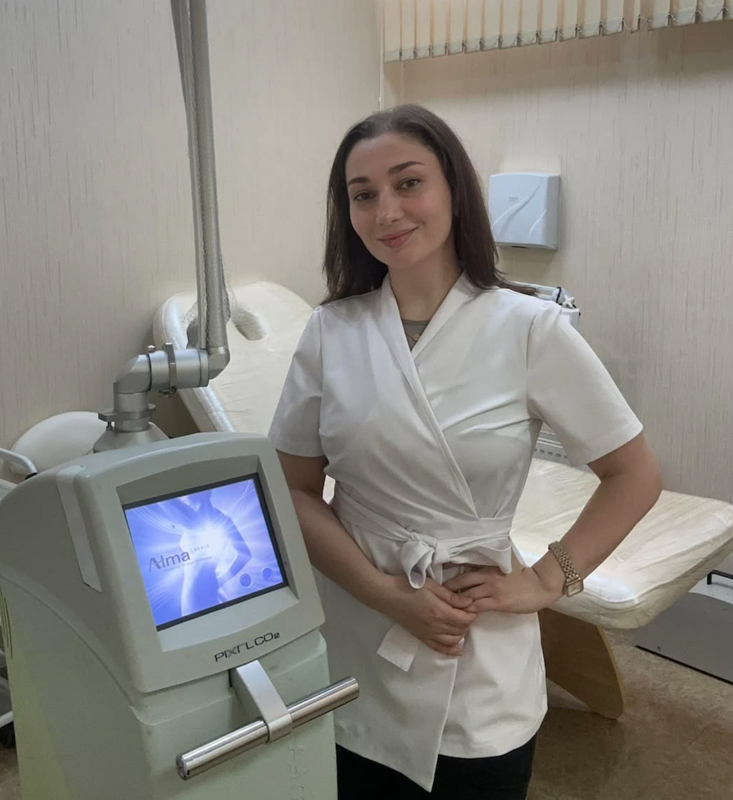
Simona Muradova
Cosmetologist (MD)
2019 · Yaroslavl Medical University · +1 cert.
Languages: Russian, Azerbaijani
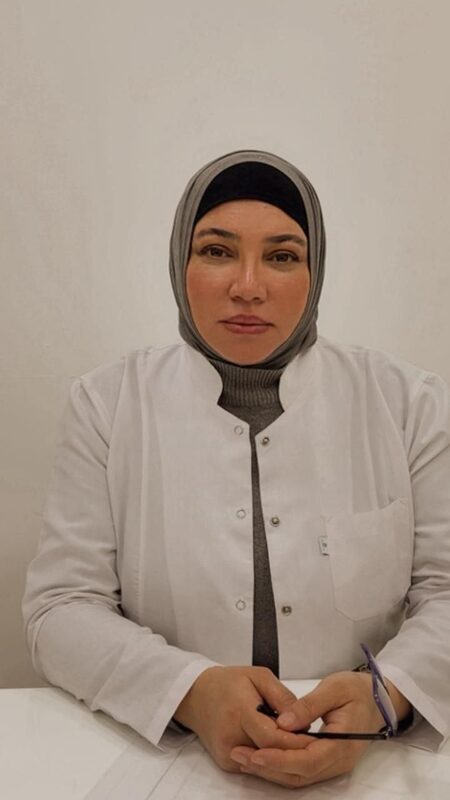
Rena Nasibova
Cosmetologist (MD)
25+ years' experience
1999 · Azerbaijan Medical University · +1 cert.
Languages: Russian, Azerbaijani
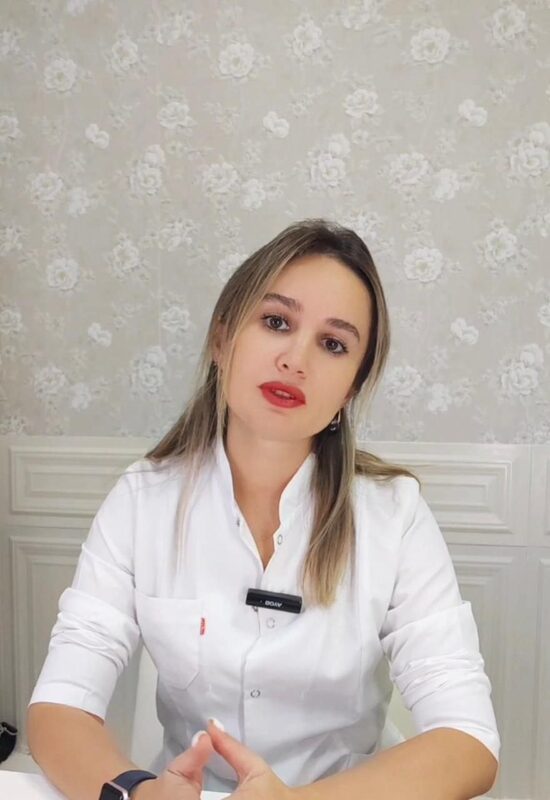
Elvira Zakiyeva
Cosmetologist (MD)
15+ years' experience
2008 · Azerbaijan Medical University · +1 cert.
Languages: Russian, Azerbaijani